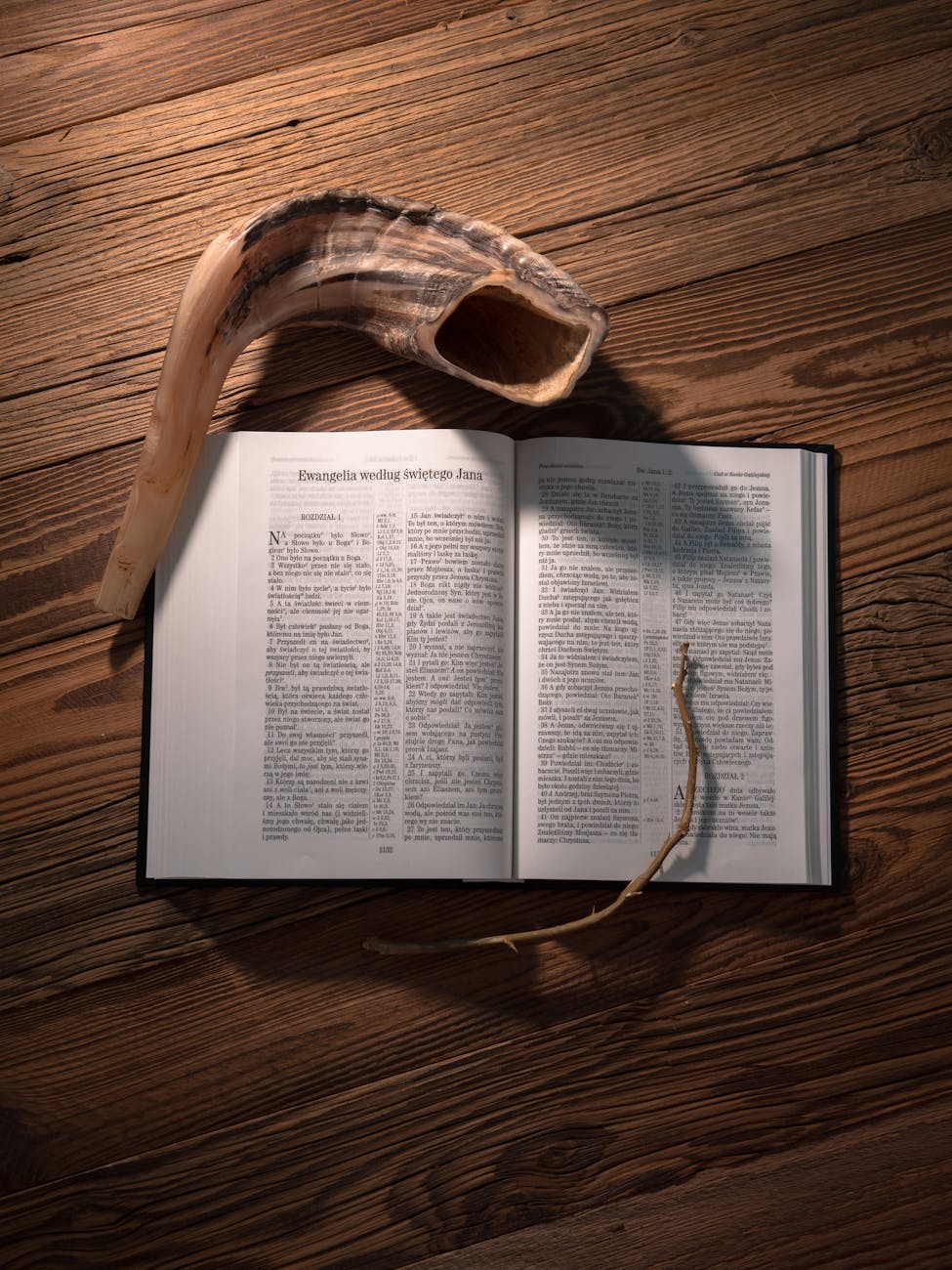
Torah: Leviticus 21:1-24:23
Haftarah: Ezekiel 44:15-31
Long ago, the Jewish sages created a reading schedule for the Torah and selected parts of the prophets’ writings. This schedule is called the Parsha. It is a schedule that predates the New Testament, and may even go back to the time of Ezra. This blog series endeavors to go through the reading schedule from beginning to end with the focus of finding the Messiah “hiding in plain site,” as Amir Tsarfati would say. I was hoping to make it a comprehensive project, and I wasn’t sure how much material I would find to write about, but I quickly learned that it is utterly beyond me to comprehensively expound on Messiah hiding in the pages of the Torah, and I am hard put to have enough time and space in my blog posts to talk about only some of the places He is found. I feel like the Apostle John who concluded his gospel like this:
Now there are also many other things that Jesus did. Were every one of them to be written, I suppose that the world itself could not contain the books that would be written (Jn. 21:25).
Though I may not reach my comprehensive goal, I do hope to get through the reading schedule having something about Messiah to say concerning every reading, with the same end as the Apostle John had when he wrote, “so that you may believe that Jesus is the Christ, the Son of God, and that by believing you may have life in his name” (Jn. 20:31). What I write is clearly not the same level of inerrancy as the Gospel, but what I am saying is I find myself faced with the same challenges and same goal as that particular Biblical author.
The Parsha reading that I will cover in this entry is Emor (Speak), which was read in synagogues on May 2 this year. From this portion, I will cover the standard of holiness for the priests, the standard of perfection for the sacrifices and the holy calendar and what all this has to do with Messiah.
The Holiness of the Priests
17 “Speak to Aaron, saying, None of your offspring throughout their generations who has a blemish may approach to offer the bread of his God (Lev. 21:17).
The priest who ministered in the tabernacle could not have any blemish or defect of any kind. He had to, essentially, be perfect. In the sacrificial system, the physical purity of the sacrifice and the ritual purity of persons was representative of a spiritual purity. That’s not to say a man born in the line of priests with a crippled hand, for example, was more sinful than his brothers without the defect. This was a common misunderstanding of the sacrificial system. It’s the mistake Job’s “comforters” made and the mistake the disciples made when they encountered a blind man. Rather, the physical defects that delegitimized a man in the priestly line from being a priest were symbolic of spiritual defects, and thus they could not serve in that function.
Thus, considering Jesus as the ultimate priest, the author of Hebrews is able to write,
For we do not have a high priest who is unable to sympathize with our weaknesses, but one who in every respect has been tempted as we are, yet without sin (Heb. 4:15 emphasis mine).
Just as the priest had to be unblemished and without defect to serve in the temple, the Messiah was without sin Himself to serve as the ultimate High Priest.
The Holiness of the Sacrifice
20 You shall not offer anything that has a blemish, for it will not be acceptable for you (Lev. 22:20).
Similarly, the sacrifice had to be without defect to be considered pure for the offering because it represented sinlessness and purity.
17 And if you call on him as Father who judges impartially according to each one’s deeds, conduct yourselves with fear throughout the time of your exile, 18 knowing that you were ransomed from the futile ways inherited from your forefathers, not with perishable things such as silver or gold, 19 but with the precious blood of Christ, like that of a lamb without blemish or spot. 20 He was foreknown before the foundation of the world but was made manifest in the last times for the sake of you (1 Pet. 17-20, emphasis mine).
Jesus was not only the priest without defect, but He was the Sacrifice without defect.
The Holy Calendar
2 “Speak to the people of Israel and say to them, These are the appointed feasts of the Lord that you shall proclaim as holy convocations; they are my appointed feasts” (Lev. 23:1).
What the English Standard Version (ESV) translates as “appointed feasts” is the Hebrew mo’ed, which “means a ‘date’ or a ‘meeting time’” (Stern, 159). It’s like an appointment. Last week, I had a dentist mo’ed (appointment). It’s saying, “I’ll be here at this time, and I expect you to be here too. I plan to set aside this time and I expect you to as well.” A date is a mo’ed. If you didn’t pick up your date and take her to dinner and a movie when you said you would, you stood her up. God had no intentions of standing up his nation He just created, and He had the same level of expectation upon them. A mo’ed is a pre-planned event set aside for a special purpose. All of this explanation is to forward what I will get into next. The calendar of all these appointed feasts either was or will be fulfilled by Messiah, on the exact holy calendar dates in the Biblical order, and thus the coming of Messiah had been planned on God’s calendar and appointed just like a mo’ed.
The Sabbath
3 “Six days shall work be done, but on the seventh day is a Sabbath of solemn rest, a holy convocation. You shall do no work. It is a Sabbath to the Lord in all your dwelling places (Lev. 23:3).
In the calendrical cycle, the Sabbath is the most frequently occurring mo’ed in the list of Leviticus 23. Whereas the other mo’edim occur annually, Shabbat is weekly. The commandment to keep Shabbat is very frequently given throughout the Torah, and it is the fourth of the Ten Commandments of Exodus 20. The Torah gives some specific examples of what “do no work” means, such as gathering sticks (Num. 15:32) and kindling a fire (Ex. 35:3). The Hebrews were supposed to prepare their food in advance for Shabbat, and during the wilderness period, God miraculously gave them a double portion that lasted for two days (Ex. 16:5). The Talmud later elaborated on what “do no work” means specifically, and some of this went beyond the Biblical intention of God. When the Pharisees confronted Jesus about his disciples picking and eating heads of grain on the Sabbath, He told them, “For the Son of Man is lord of the Sabbath” (Mt. 12:8. See also Mk. 2:28 and Lk. 6:5). The term Son of Man is a Messianic title, not a reference to just any old person. Jesus is in a sense saying, “Look, I came up with this in the first place, so I get to define it. I’m not changing the definition. You started misapplying it.” (See Mt. 12:3-14 for the context of how Jesus told them they misapplied it.)
Matthew and Luke saw this connection continue with the Pharisees’ criticism of Jesus healing on the Sabbath, particularly healing a cripple (see Mt. 12:9-14 and Lk. 6:6-11). John records the same sort of criticism of Jesus when He healed a man born blind on the Sabbath (See Jn. 9, especially vs. 16). The misapplication of the Sabbath both angered and grieved Jesus (Mk. 3:5), but Jesus’ rejection of the extrabiblical regulations of the Sabbath left the Pharisees “filled with fury” (Lk. 6:11).
Jesus did keep the Sabbath perfectly as it was intended, both in His life and in His death. Sleep is a Biblical euphemism for death (Lk. 8:52, I Cor. 15:6), and the author of Hebrews likens eternal life to the Sabbath. Beyond the weekly Sabbath and the rest God gave Israel in the Promised Land, the author says,
9 So then, there remains a Sabbath rest for the people of God, 10 for whoever has entered God’s rest has also rested from his works as God did from his. 11 Let us therefore strive to enter that rest, so that no one may fall by the same sort of disobedience. (Heb. 4:9-11).
Since the Bible likens death to sleep and life after death to the Sabbath rest God promises, Jesus arguably fulfilled the Sabbath by His burial in the tomb for a full Sabbath. Sleep is also likened to death in Jewish tradition.
He sustains the living with loving kindness, resurrects the dead with great mercy, supports the falling, heals the sick, releases the bound, and fulfills His trust to those who sleep in the dust (Amidah).
Jesus was dead, literally, euphemistically asleep, and He rested from His labor on the earth. His work was finished (Jn. 19:30). His time had come (Mk. 14:41). He died on Friday, and Friday evening began the Sabbath. He was in the tomb until sometime very early on Sunday, after the Sabbath had ended and before the sun rose (Mt. 28:1-7). So He was in the rest of death for the full Sabbath.
Jonathan Cahn connects Jesus’ death with the Sabbath like this:
The Sabbath comes from a Hebrew word that means to cease. Messiah died on Friday afternoon, the eve of the Sabbath. When the Sabbath came, His work was finished and so He rested (Sapphires, May 22, 2026).
Jesus therefore fulfilled the Sabbath perfectly in the body during His life and in spirit by His death.
Passover
5 In the first month, on the fourteenth day of the month at twilight, is the Lord’s Passover (Lev. 23:5).
Passover is the first annually occurring mo’ed given in Leviticus 23. I have already elaborated extensively on how Jesus fulfills Passover in my posts Bo (Go) and Afikomen of the Seder. I will give a cursory summary here.
Jesus is the Passover Lamb in that He died at the same time as the Passover lamb was sacrificed in the temple according to Josephus. Jesus died in our place so that we who are responsible for our own sin (as a firstborn is responsible for his household) do not have to die for our sin. Howard and Rosenthal write, “So, too, in the spiritual sense, all men are firstborn. All are sinners just as Adam and, therefore, are under the curse of death and in need of redemption (Rom. 5:17, 19; 1 Cor. 15:22)” (85). God passes over us with the judgement and put the judgement on the firstborn son of Mary, and only begotten Son of God, Jesus Christ. Jesus fulfills the function of the Passover lamb at the time the Passover lamb was sacrificed. The Bible itself attests to this connection between Jesus and the first annual mo’ed.
Cleanse out the old leaven that you may be a new lump, as you really are unleavened. For Christ, our Passover lamb, has been sacrificed (1Cor. 5:7).
Unleavened Bread
6 And on the fifteenth day of the same month is the Feast of Unleavened Bread to the Lord; for seven days you shall eat unleavened bread (Lev.23:6).
Jesus also fulfills the feast of Unleavened Bread. Biblically, it began the day after Passover. I have already extensively talked about Jesus as the Unleavened Bread in Bo (Go) and Afikomen of the Seder, but I will add some more content here that also serves as a good summary of the essence of His fulfillment of Unleavened Bread. The year Jesus died, Unleavened Bread began on the Sabbath that His body was in the grave. Jesus is the Unleavened Bread in that He was without sin, and leaven is a traditional symbol of sin.
Sin is often pictured as leaven in Scripture (Mt. 16:6, 11; Mk. 8:15; Lk. 12:1; Gal. 5:9). The ancient rabbis also believed that ‘leaven represents the evil impulse of the heart” (Berachot 17a). Leaven is well-suited as a picture of sin since it rapidly permeates the dough, contaminating it, souring it, fermenting it, and swelling it to many times its original size without changing its weight. In fact, this souring process (the first stage of decay) is operative solely because of the curse of death decreed by God when Adam sinned.
Since leaven pictures sin, only unleavened bread (matzah) was used in the Temple (Lev. 2:11; 6:16-17; 10:12). Offerings had to be pure, and anything leavened was deemed impure and unfit (Howard and Rosenthal, 68-69).
Specifically, only unleavened bread could be offered on the altar. The Firstfruits bread and showbread could be or were leavened, but that’s another point. The unleavened bread symbolized sinlessness. The Bible attests to Jesus’ sinless state:
For we do not have a high priest who is unable to sympathize with our weaknesses, but one who in every respect has been tempted as we are, yet without sin (Heb. 4:15, emphasis mine).
17 And if you call on him as Father who judges impartially according to each one’s deeds, conduct yourselves with fear throughout the time of your exile, 18 knowing that you were ransomed from the futile ways inherited from your forefathers, not with perishable things such as silver or gold, 19 but with the precious blood of Christ, like that of a lamb without blemish or spot (1 Pet. 17-19, emphasis mine).
The afikomen is the middle of three matzahs on the seder table. Jesus, the Son, the second Person of the Godhead, was broken for us just as the middle matzah, the afikomen, was broken during the meal. This middle matza is the one Jesus broke when He said, “This is my body, which is for you. Do this in remembrance of me” (1 Cor. 11:24). The remaining afikomen which is not passed around to eat during the meal is wrapped in a white linen cloth and hidden away until the end of the meal. Jesus’ body was wrapped “in a clean linen shroud” (Mt. 27:29) and hidden away in the tomb. After His resurrection, the disciples ran out looking for him according to the word of the women who visited the tomb early that morning. Jesus is the Unleavened Bread of the Passover! 1 Corinthtians 5:8 says,
Let us therefore celebrate the festival [Passover], not with the old leaven, the leaven of malice and evil, but with the unleavened bread of sincerity and truth (1 Cor. 5:8).
Paul would not admonish the Church to celebrate with unleavened hearts if their Savior’s was not unleavened. Howard and Rosenthal summarize Jesus’ fulfillment of Unleavened Bread like this:
The Messiah fulfilled the Feast of Unleavened Bread in that He was a pure, sinless (without leaven) sacrifice. God validated this by the Messiah’s burial in a rich man’s tomb. Furthermore, the body of the Messiah was not permitted to decay in the grave (like dough soured by leaven), but was brought forth because He was not a sinner under the curse of death and decay (Howard and Rosenthal, 70).
Jesus, again, by His sinless life in the body and His validation as a sinless One through His death and resurrection, fulfills the Feast of Unleavened Bread. He even fulfilled it on the day of Unleavened Bread in that His sinless body was wrapped in a linen cloth and tucked away like the afikomen.
Firstfruits
9 And the Lord spoke to Moses, saying, 10 “Speak to the people of Israel and say to them, When you come into the land that I give you and reap its harvest, you shall bring the sheaf of the firstfruits of your harvest to the priest, 11 and he shall wave the sheaf before the Lord, so that you may be accepted. On the day after the Sabbath the priest shall wave it. 12 And on the day when you wave the sheaf, you shall offer a male lamb a year old without blemish as a burnt offering to the Lord (Lev. 23:9-12).
Again, Jesus fulfilled Firsfruits on the day of Firstfruits. Firstfruits is when the people of Israel brought the first portion of their harvest to the temple for the Lord. Concerning its timing, Howard and Rosenthal explain the interpretation of, “[o]n the day after the Sabbath.”
Scripture did not specify the actual calendar date of Firstfruits, but merely prescribed its time of observance to be “on the day after the Sabbath” (Lev. 23:11). This led to various interpretations and considerable debate as to which sabbath was in view.
The Saducees, and later the Karaite Jews, understood it to refer to the first weekly sabbath (Saturday) which occurred during the week of Passover season. However, the word sabbath also designated any holy day on which work was prohibited, no matter on which day of the week it occured (Lev. 23:24, 32, 39). The majority opinion, held by the Pharisees, was that the sabbath in question was Nisan 15, the first day of the Feast of Unleavened Bread. That day was to be “a holy convocation” (Lev. 23:7) on which no work was to be performed. This same description was given to the weekly sabbath (Lev. 23:3) and to holy-day sabbaths held on other days of the week (Lev. 23:24-25, 28, 32, 36, 39).
Ancient Jewish observance agreed with this interpretation. Josephus, the first-century Jewish historian, wrote: “But on the second day of unleavened bread, which is the sixteenth day of the month, they first partake of the fruits of the earth, for before that day they do not touch them (Antiquities of the Jews 3.10.5) (Howard and Rosenthal, 76).
Fortunately for us, Jesus settled the debate the day He rose from the dead. Since that Sunday was both the day after the sabbath of Unleavened Bread, Nisan 16, as well as the day after the first weekly sabbath of the festival year, Jesus fulfilled Firstfruits according to either interpretation by His resurrection.
20 But in fact Christ has been raised from the dead, the firstfruits of those who have fallen asleep. 21 For as by a man came death, by a man has come also the resurrection of the dead. 22 For as in Adam all die, so also in Christ shall all be made alive. 23 But each in his own order: Christ the firstfruits, then at his coming those who belong to Christ (1 Cor. 15:20-23).
According to Paul, Jesus is the firstfruit of the resurrection unto eternal life, in an incorruptible, glorified body. He is not the first one to rise from the dead. Elisha raised people from the dead during his life and in his death. One man rose from the dead by touching Elisha’s bones!
20 So Elisha died, and they buried him. Now bands of Moabites used to invade the land in the spring of the year. 21 And as a man was being buried, behold, a marauding band was seen and the man was thrown into the grave of Elisha, and as soon as the man touched the bones of Elisha, he revived and stood on his feet (2 Kgs. 13:20-21).
Jesus definitely raised many from the dead during His years of ministry (Mt. 11:5) and also by His death : “52 The tombs also were opened. And many bodies of the saints who had fallen asleep were raised, 53 and coming out of the tombs after his resurrection they went into the holy city and appeared to many” (Mt. 27:52).
Though others rose from the dead before Jesus, they died again. Jesus is the firstfruit of the eternal resurrection. The firstfruit was dedicated to God as a good faith that God would bless the rest of the harvest. By faith, we can likewise trust in Jesus as the promise of a future resurrection that we will be a part of if we hope in Him.
Jesus therefore fulfilled the Feast of Firstfruits on the actual day of the Feast of Firstfruits.
Shavuot
15 “You shall count seven full weeks from the day after the Sabbath, from the day that you brought the sheaf of the wave offering. 16 You shall count fifty days to the day after the seventh Sabbath. Then you shall present a grain offering of new grain to the Lord. 17 You shall bring from your dwelling places two loaves of bread to be waved, made of two tenths of an ephah. They shall be of fine flour, and they shall be baked with leaven, as firstfruits to the Lord (Lev. 23:15-17).
Jesus also fulfilled Shavuot, or Pentecost, on the actual day according to the Hebrew calendar God gave in Leviticus 23. Before we get into that, I want to pull in an early extrabiblical record that concerns Shavuot, that of the Roman historian Flavius Josephus. He is a helpful guy for this blog post also.
Moreover, at that feast which we call Pentecost, as the priests were going by night into the inner [court of the] temple, as their custom was, to perform their sacred ministrations, they said that, in the first place, they felt a quaking, and heard a great noise, and after that they heard a sound as of a great multitude saying, “Let us remove hence” (582).
This is so amazing to me! Why? Because according to Josephus, this event happens the same approximate time (even the same year) the temple doors opened on their own, which I argue in my post The Light’s Contribution to the World, is the time Jesus was crucified, “before the Jews’ rebellion, and before those commotions which preceded the war, when the people were come in great crowds to the feast of unleavened bread” (Josephus, 582). When we analyze this account from Josephus with the book of Acts, the parallels are staggering, especially when you understand Jewish tradition. Both Acts and Josephus could be talking about the same event from two different eye witness points of view.
2 When the day of Pentecost arrived, they were all together in one place. 2 And suddenly there came from heaven a sound like a mighty rushing wind, and it filled the entire house where they were sitting. 3 And divided tongues as of fire appeared to them and rested on each one of them. 4 And they were all filled with the Holy Spirit and began to speak in other tongues as the Spirit gave them utterance (Acts 2:2-4).
In the temple on Pentecost, there was a quaking and a great noise. In Acts, the noise was the sound of mighty rushing wind. In the temple, the priests heard “a sound of a great multitude” speaking, “Let us remove hence.” In Acts, the disciples, filled with the Holy Spirit, spoke the words of the Spirit. The voice or voices saying “Let us” is reminiscent of God’s spoken words before He created humankind: ““Let us make man in our image, after our likeness” (Gen. 1:26). 2 Cor. 5:17 says, “Therefore, if anyone is in Christ, he is a new creation. The old has passed away; behold, the new has come.” As God began creating humankind by saying, “Let us,” so He began to recreate humankind by the Spirit by perhaps saying, “Let us” according to the testimony of the priests in the inner sanctuary. The voice of God is likened to the voice of a multitude:
When he utters his voice, there is a tumult of waters in the heavens, and he makes the mist rise from the ends of the earth. He makes lightning for the rain, and he brings forth the wind from his storehouses (Jer. 10:13).
[H]is feet were like burnished bronze, refined in a furnace, and his voice was like the roar of many waters (Rev. 1:15).
This description of many waters is used to describe what a group of many voices sounds like:
Then I heard what seemed to be the voice of a great multitude, like the roar of many waters and like the sound of mighty peals of thunder, crying out, “Hallelujah! For the Lord our God the Almighty reigns (Rev. 19:6).
God is so great, He refers to Himself in a plurality from the very beginning in Genesis 1. His voice reflects the profundity of His identity. Could it be that the priests sensed the moving of the Holy Spirit on that particular Pentecost? Could the “sound” they heard speaking have been the Lord? If the Lord removed hence from the Temple, could He have then rested on the disciples? I would say arguably that this is possible, and that Josephus records an eye-witness story to the events of that Pentecost from the perspective inside the temple. 1 Corinthians 6:19-20 says,
19 Or do you not know that your body is a temple of the Holy Spirit within you, whom you have from God? You are not your own, 20 for you were bought with a price. So glorify God in your body.
Could it be that the Spirit, the Divine Presence, the Shekina, left the temple and went to rest in the hearts of believers because of Jesus’ atonement for their souls? According to Paul, the bodies of believers become the temple of the Holy Spirit. On Pentecost, the Holy Spirit filled the believers.
But what about the departure of God’s presence from the temple? Where is that? Check out Ezekiel:
10 Moreover, he said to me, “Son of man, all my words that I shall speak to you receive in your heart, and hear with your ears. 11 And go to the exiles, to your people, and speak to them and say to them, ‘Thus says the Lord God,’ whether they hear or refuse to hear.”
12 Then the Spirit lifted me up, and I heard behind me the voice of a great earthquake: “Blessed be the glory of the Lord from its place!” 13 It was the sound of the wings of the living creatures as they touched one another, and the sound of the wheels beside them, and the sound of a great earthquake. 14 The Spirit lifted me up and took me away, and I went in bitterness in the heat of my spirit, the hand of the Lord being strong upon me. 15 And I came to the exiles at Tel-abib, who were dwelling by the Chebar canal, and I sat where they were dwelling. (Ez. 3:10-15, emphasis mine).
The voice (I use singular because the Bible uses singular) of the heavenly beings of God’s heavenly dwelling is described as an earthquake, like what the priests experienced on Penetcost in the temple, God’s earthly dwelling place. Ezekiel was lifted up by the Spirit and commissioned to speak to the Judean exiles. The disciples were filled with the Holy Spirit and Peter proceeded to speak to Jews “from every nation under heaven” (Acts 2:5), that is, Jews of the dispersion. The words of the voice in Ezekiel 3, “Blessed be the glory of the Lord from this place!” sound a lot like what the priests heard in Josephus’ account. There is a departure of presence in both instances. Perhaps what the priests experienced was much like what Ezekiel experienced in His vision. Like Ezekiel, the disciples were commissioned to speak God’s word, and it was up to the House of Israel to “hear or refuse to hear.” But unlike Ezekiel’s audience, the Israelites in Acts chapter 2 did hear:
37 Now when they heard this they were cut to the heart, and said to Peter and the rest of the apostles, “Brothers, what shall we do?” 38 And Peter said to them, “Repent and be baptized every one of you in the name of Jesus Christ for the forgiveness of your sins, and you will receive the gift of the Holy Spirit. 39 For the promise is for you and for your children and for all who are far off, everyone whom the Lord our God calls to himself” (Acts 2:37-39).
Does the departure of God’s presence from the temple represent the rejection of Israel? Absolutely not! The results of Peter’s sermon on Pentecost testify to that: “So those who received his word were baptized, and there were added that day about three thousand souls” (Acts 2:41). Those “souls” were Jews. The Jewish religious leadership had largely rejected Jesus, and so He withdrew from those who rejected Him, but He did not reject the people and He never will. God withdrew His Presence from Solomon’s temple, but He did not reject His people then. No Christian says God rejected His people before Jesus came. So why would He do it in the second temple?
Since the Divine Presence moved into the hearts of believers, does this mean Pentecost nullified the sacrificial system and God no longer had a use for the temple? My current pastor teaches this. But by no means! The Aaronic temple system is but a copy and a shadow of the substance. Jesus did not replace the high priest on earth. The author of Hebrews makes it very clear that Jesus would never do that: “4 Now if he were on earth, he would not be a priest at all, since there are priests who offer gifts according to the law. 5 They serve a copy and shadow of the heavenly things” (Heb 8:4-5a). If my husband is in his workshop making wooden furniture, and he gives our children a play woodworking set, he does not come and take away their woodworking set and say it is now his. That would be absurd. Nor would he say, “Your toy woodworking set doesn’t actually build anything of practical substance. It’s just a toy. I actually make useful things. I’m going to do away with your toy set.” That would be cruel. No, that toy woodworking set is there for our children if they express an interest in learning how their father works with wood, and through that toy, they learn how furniture can actually be made out of wood. It is there as long as our children have interest in it and for as long as it is useful as an educational tool. One day, our children will be old enough to make wood furniture with my husband with His tools, but my husband will not destroy their play set. He would probably save it and pass it to our grandchildren. Likewise, the Aaronic priesthood and sacrificial system is like a scale model of the spiritual realities that happen in the spiritual sphere. So the moving of the Holy Spirit from the Temple to the bodies of believers does not signify the rejection of the Jews as God’s chosen people nor the doing away with the sacrificial system. That temple stood for forty years after Jesus’ earthly ministry, and believers continued to go there to worship as long as they could. Please don’t misunderstand me. I’m not saying the tabernacle was a toy. God killed people who disrespected or mishandled it. But Scripture does say, “it is impossible for the blood of bulls and goats to take away sins” (Heb. 10:4), the tabernacle was “a copy and shadow of the heavenly things” (Heb. 8:5), and also that God instituted the Aaronic priesthood as a “perpetual priesthood” (Ex. 40:15; Num. 25:13) that should last “forever” (Lev. 3:17, 6:18, 6:22, 10:9, 10:15). The tabernacle was not plan A and Jesus became plan B. No, Jesus was plan B and knowing that, God still said the Aaronic priesthood was perpetual and forever. How else shall we interpret Scripture with Scripture? Now that I’m off that little soapbox, let’s get back to Pentecost.
This Holy Spirit that fell on the believers at Pentecost or Shavuot was the one promised by Jesus. Jesus said, “But the Helper, the Holy Spirit, whom the Father will send in my name, he will teach you all things and bring to your remembrance all that I have said to you” (Jn. 14:26), and “…when the Helper comes, whom I will send to you from the Father, the Spirit of truth, who proceeds from the Father, he will bear witness about me. 27 And you also will bear witness, because you have been with me from the beginning” (Jn. 15:26-27).
On Shavuot, the countdown of the Omer begins. At Jesus’ resurrection, the countdown to the outpouring of the Holy Spirit began.
Okay, so Shavuot and the outpouring of the Holy Spirit fell on the same day, but what about the time of day? Josephus records that it was night. Acts records that Peter spoke the third hour of the day, which translates to 9:00 am. Acts does not say the Holy Spirit initially fell at 9:00 am. Actually, it says the Holy Spirit came “suddenly” “[w]hen the day of Pentecost arrived” (Acts 2:1-2). Remember, Jewish days begin when the sun goes down, which is the beginning of night! So the Holy Spirit fell on them when it was night.
What were they doing all gathered together at night? Understanding Jewish tradition a little will easily answer that question. A tradition called Tikkun Leil Shavuot.
It is customary for observant Jews to stay up the entire night of Shavuot studying and discussing Torah. Traditionally, they study the opening and closing verses of each Sabbath reading, the opening and closing verses of each book of the Bible, and the entire Book of Ruth. Throughout the night there are periodic breaks for coffee and cheesecake.
As dawn approaches in Israel, thousands of observant Jews can be seen winding their way from the Orthodox quarters of Jerusalem toward the site of the ancient Temple. These multitudes pour onto the Western Wall plaza to recite the ancient Amidah prayer together. The Amidah or “standing” prayer with its nineteen blessings dates back to more than 2,000 years. It forms the central prayer of all prayer services (morning, afternoon, evening, Sabbath, and holidays) (Howard and Rosenthal, 97).
Could the disciples have gathered with one accord at night to practice Tikkun Leil Shavuot? I think it’s highly likely. And it was during that night of study and prayer that the Holy Spirit fell upon them. As observant Jews made their way to the then standing temple the next morning, passersby would have been curious about the tongues they heard coming from the house where the disciples stayed. Maybe they felt the earthquake like the priests. Maybe they heard the great rushing wind like the disciples. It must have been close enough to a significant traffic way to the temple to attract at least 3,000 people.
As they were on their way to the temple to recite the Amidah, they heard Peter’s sermon. As I cite sections of the Amidah below, please read it closely and compare it to Peter’s sermon and who he quotes from the Scriptures in Acts. I would highly recommend reading the entire Amidah. You can find a link to a copy in the sources below.
My L-rd, open my lips, and my mouth shall declare Your praise…He causes the dew to descend…He causes the wind to blow and the rain to fall…
We will hallow and adore You as the sweet words of the assembly of the holy Seraphim who thrice repeat “holy” unto You, as it is written by Your prophet: And they call one to another and Say,
(Cong. and Chazzan🙂 “Holy, holy, holy is the L-rd of hosts; the whole earth is full of His glory.”
(Chazzan:) Those facing them offer praise and say,
(Cong and Chazzan:) “Blessed be the glory of the L-rd from its place.”
(Chazzan:) And in Your holy Scriptures it is written thus:
(Cong. and Chazzan:) The L-rd shall reign forever; your G‑d, O Zion, throughout all generations. Praise the L-rd…Cause us to return, our Father, to Your Torah; draw us near, our King, to Your service; and bring us back to You in whole-hearted repentance. Blessed are You L-rd, who desires penitence.
Pardon us, our Father, for we have sinned; forgive us, our King, for we have transgressed; for You are a good and forgiving G‑d. Blessed are You L-rd, gracious One who pardons abundantly…
Bless for us, L-rd our G‑d, this year and all the varieties of its produce for good; and bestow
During the summer season say:
blessing
During the winter season say:
dew and rain for blessing
upon the face of the earth. Satisfy us from Your bounty and bless our year like other good years, for blessing; for You are a generous G‑d who bestows goodness and blesses the years. Blessed are You L-rd, who blesses the years…
Return in mercy to Jerusalem Your city and dwell therein as You have promised; speedily establish therein the throne of David Your servant, and rebuild it, soon in our days, as an everlasting edifice. Blessed are You L-rd, who rebuilds Jerusalem.
Speedily cause the scion of David Your servant to flourish, and increase his power by Your salvation, for we hope for Your salvation all day. Blessed are You L-rd, who causes the power of salvation to flourish…
Our G‑d and G‑d of our fathers, may there ascend, come and reach, be seen, accepted, and heard, recalled and remembered before You, the remembrance and recollection of us, the remembrance of our fathers, the remembrance of Mashiach the son of David Your servant, the remembrance of Jerusalem Your holy city, and the remembrance of all Your people the House of Israel, for deliverance, well-being, grace, kindness, mercy, good life and peace, on this day…
Five verses before Peter’s quotation of Joel, Joel likens the outpouring of the Holy Spirit to rain: ““Be glad, O children of Zion, and rejoice in the Lord your God,
for he has given the early rain for your vindication; he has poured down for you abundant rain, the early and the latter rain, as before” (Joel 2:23). I think it’s a nice connection that the Amidah mentions the blessing of rain. It also mentions Messiah several times, about which Peter speaks, and it mentions many times (in places I did not quote here) the resurrection of the dead (and Peter specifically talks about Jesus’ resurrection to the incorruptible) and even quotes the passage of Ezekiel that I cited earlier. I was absolutely blown away when I found that the Amidah cites the passage from Ezekiel: “Blessed be the glory of the L-rd from its place.” I hope that means the Holy Spirit is leading me to make well-established connections as if they were new. They are new to me. I will say that much. And making these connections for myself as I learn instead of first being told the connections by others affirms to me that I am on the right path.
There is more I have to say about the loaves presented at Shavuot, but there just isn’t room here. I want to stick with this as my main point about Shavuot for now, and I will have to revisit the profundity of the loaves of Shavuot at another time.
Jesus, by giving the Holy Spirit, totally fulfilled Shavuot according to both Biblical instructions and tradition.
Trumpets
23 And the Lord spoke to Moses, saying, 24 “Speak to the people of Israel, saying, In the seventh month, on the first day of the month, you shall observe a day of solemn rest, a memorial proclaimed with blast of trumpets, a holy convocation (Lev. 23:23-24).
The Feast of Trumpets (Or Yom Teruah or Rosh Hashanah) is the first of the last four unfulfilled mo’edim. Since the rest have not yet been fulfilled, I won’t speak as certainly about these out of caution. I am not a prophetess, just a woman gifted with teaching who seeks to understand prophecy. The disciples didn’t realize Jesus’ fulfillment of the first three mo’edim until after it was all done, and so I won’t presume to say I have the last four figured out entirely in advance. What I will do, though, is specify connections between the rest of the four mo’edim and what the New Testament explains eschatologically as well as excerpts from the Amidah specifically indented for these final mo’edim.
Since the first three were fulfilled on the exact holy days, I would assume that if God follows the same pattern, the latter four would likewise be fulfilled on the exact days. True, Jesus said we won’t know the day or hour of His return (Mt. 24:36), but given that it’s been about 2,000 years now, it’s not like we can pinpoint exactly which Yom Kippur he plans on coming. You know?
The Feast of Trumpets is traditionally associated with the resurrection of the dead. According to Howard and Rosenthal,
Ancient Jewish tradition held that the resurrection of the dead would occur on Rosh Hashanah. Reflecting this tradition, Jewish gravestones were often engraved with a shofar (114).
On Rosh Hashanah, the Amidah adds these lines:
Who is like You, merciful Father, who in compassion remembers His creatures for life. You are trustworthy to revive the dead. Blessed are You L-rd, who revives the dead.
It’s fascinating that the resurrection is associated with the Feast of Trumpets traditionally, because Paul writes about the connection between the trumpet and the resurrection:
51 Behold! I tell you a mystery. We shall not all sleep, but we shall all be changed, 52 in a moment, in the twinkling of an eye, at the last trumpet. For the trumpet will sound, and the dead will be raised imperishable, and we shall be changed. 53 For this perishable body must put on the imperishable, and this mortal body must put on immortality. 54 When the perishable puts on the imperishable, and the mortal puts on immortality, then shall come to pass the saying that is written:
“Death is swallowed up in victory.”
55 “O death, where is your victory?
O death, where is your sting?”56 The sting of death is sin, and the power of sin is the law. 57 But thanks be to God, who gives us the victory through our Lord Jesus Christ (1 Cor. 15:51-57).
In Paul’s first letter to the Thessalonians, he specifies that the rapture will occur at the same time as the resurrection:
13 But we do not want you to be uninformed, brothers, about those who are asleep, that you may not grieve as others do who have no hope. 14 For since we believe that Jesus died and rose again, even so, through Jesus, God will bring with him those who have fallen asleep. 15 For this we declare to you by a word from the Lord, that we who are alive, who are left until the coming of the Lord, will not precede those who have fallen asleep. 16 For the Lord himself will descend from heaven with a cry of command, with the voice of an archangel, and with the sound of the trumpet of God. And the dead in Christ will rise first. 17 Then we who are alive, who are left, will be caught up together with them in the clouds to meet the Lord in the air, and so we will always be with the Lord (1 Thes. 4:13-17).
I was raised in an amillennialist church and I used to say that if the rapture were true, I would be pleasantly surprised (because I did not believe in the rapture). But after studying the mo’edim of Leviticus 23 for at least five years now, I have to say that my mind has been persuaded to lean toward a rapture. Paul even uses in 1 Thessalonians the Greek word from which we get our word “rapture”. What the ESV translates as “caught up” is the Greek harpazo, which means “to seize” or “catch (away, up), pluck, pull, take (by force)” (Strong’s Exhaustive Concordance number 726). That sounds like a rapture to me.
Twice now lately, my three-year-old daughter asked me out of the blue the most surprising question. One Wednesday night last month, as I watched live the presidential address concerning Iran, my daughter hung off of me saying, “Mommy, mommy…”
I shushed her. “Mommy wants to listen,” I said.
Then she whispered, “Mommy…” I settled her down for a while, and she watched the screen with me eating a bedtime snack, then out of the blue she turned to me and said very clearly and focused, “Mommy, is Jesus coming to pick us up soon?” I was quite taken aback. I have never talked to her about a rapture, and even if I did, how could a three-year-old understand that?
“Who told you that?” I asked.
“I don’t know,” she said.
Then a week or two later, we were in the car together talking about trees I think, and then she again said suddenly out of the blue, very sincerely, “Mommy, is Jesus picking us up soon?” All I can say is that if He is, and my family and I are caught up, I hope and pray that what I write on this blog will continue on the Internet as a testament that God is true and God is faithful and that it is time for those who are left to believe and repent! And if He tarries, I hope and pray that what I write on this blog serves as a testament that God is true and faithful and that it is time to believe and repent.
Jesus will fulfill the Feast of Trumpets by blowing the trumpet (shofar), raising the believers who died, transforming the believers alive, and plucking us up from the earth to be with Him forever, that wherever He is, we also will be (Jn. 14:3). According to the Biblical roadmap given us in the mo’edim of Leviticus 23, this is the next event, and though we don’t and won’t know the day or hour, it is likely it will be fulfilled during the Jewish observance of the Feast of Trumpets (which occurs over two days now, by the way. Maybe that’s also why we don’t know the day. Just food for thought).
There is so much more I could say about Trumpets, but for sake of time and space, I won’t right now.
Day of Atonement
I already talked extensively about Yom Kippur or the Day of Atonement in my last post, The Day of Atonement, the Goats, and the Crimson Thread, so I won’t make this post extra long by reiterating it all again. What I will say is in summary that it appears that the Day of Atonement was not only given as a mo’ed to Israel for the day their sins would be forgiven for another year, but it is an eschatological foreshadowing of the day God will judge all the nations of the earth for how they both knew Him and received His people. In other words, this is Judgement Day.
Bear with me here, because I know there are a lot of different interpretations of the last days, and I myself have changed position, but only because I studied the Bible on my own instead of just listening to what I was taught. So please, go study it yourself, and use good hermeneutic principles. I am still learning too.
For those who did not believe in Messiah when He raptured His Church, there will be a period of time that they can still repent. We find this in the Jewish Days of Awe, the time period for repentance between the Feast of Trumpets and the Day of Atonement. This is when people who are “on the fence” can still have their names written in the Book of Life if they repent. Specifically during the Days of Awe, Jews pray in the Amidah
Remember us for life, King who desires life; inscribe us in the Book of Life, for Your sake, O living G‑d…Who is like You, merciful Father, who in compassion remembers His creatures for life…Inscribe all the children of Your Covenant for a good life…And in the Book of life, blessing, peace and prosperity, deliverance, consolation and favorable decrees, may we and all Your people the House of Israel be remembered and inscribed before You for a happy life and for peace.
Yom Kippur is the day judgement is sealed and finalized, but between Trumpets and Atonement, tradition and Scripture scream “Repent!”
The Book of Life is very Biblical and goes back to the understanding Moses had:
31 So Moses returned to the Lord and said, “Alas, this people has sinned a great sin. They have made for themselves gods of gold. 32 But now, if you will forgive their sin—but if not, please blot me out of your book that you have written.” 33 But the Lord said to Moses, “Whoever has sinned against me, I will blot out of my book (Ex. 32:31-33).
King David, when seized by the Philistines, was inspired to write,
You have kept count of my tossings;
put my tears in your bottle.
Are they not in your book? (Ps. 56:8).
Your eyes saw my unformed substance; in your book were written, every one of them, the days that were formed for me, when as yet there was none of them (Ps. 139:16).
The Apostle Paul likewise had this understanding of the Book of Life and was doubtless familiar with the Adimah prayer for the Day of Atonement:
Yes, I ask you also, true companion, help these women, who have labored side by side with me in the gospel together with Clement and the rest of my fellow workers, whose names are in the book of life (Phil 4:3).
Through the Apostle John, Jesus says He holds the Book of Life:
The one who conquers will be clothed thus in white garments, and I will never blot his name out of the book of life. I will confess his name before my Father and before his angels (Rev. 3:5).
Those whose names are not written in the Book of Life will worship and marvel at the one called “the beast” (Rev. 13:8; 17:8) instead of worshipping God.
This Book of Life and other books are opened on judgment day:
11 Then I saw a great white throne and him who was seated on it. From his presence earth and sky fled away, and no place was found for them. 12 And I saw the dead, great and small, standing before the throne, and books were opened. Then another book was opened, which is the book of life. And the dead were judged by what was written in the books, according to what they had done. 13 And the sea gave up the dead who were in it, Death and Hades gave up the dead who were in them, and they were judged, each one of them, according to what they had done. 14 Then Death and Hades were thrown into the lake of fire. This is the second death, the lake of fire. 15 And if anyone’s name was not found written in the book of life, he was thrown into the lake of fire (Rev. 20:11-15).
Just in case you’re confused about what this passage means when the sea and Death and Hades gave up their dead, this is the second resurrection, the resurrection of unbelievers. The first resurrection is the one that happens when Jesus comes to catch up His own (1 Thes. 4:16-17) and they will rule with Him “a thousand years” (Rev. 20:6), while unbelievers won’t be resurrected until the end of those thousand years (Rev. 20:5), until their judgement day.
The “lake of fire” is going to be an eternal fire (Mt. 18:8, 25:41: Jude 1:7). Those of the second resurrection, who come up out of Death and Hades, will be thrown into eternal damnation in their resurrected bodies.
And do not fear those who kill the body but cannot kill the soul. Rather fear him who can destroy both soul and body in hell (Mt. 10:28).
This is similar to Korah fate, who “went down alive into Sheol” (Num. 16:33).
The good news is that today is the day every human being has the chance to repent and escape this fate. Just believe Jesus is the Son of God and died for your sins that deserve punishment. Ask for His forgiveness and turn away from your sins and do good. Your good works will not save you. Only your faith will save you, but your good works in repentance are the evidence of your faith. So you must believe and turn from sin and do good. If you are still breathing and the Books haven’t been opened yet, then it’s not too late to repent. It will be pretty obvious when it’s too late to repent.
What I didn’t share earlier is that before Trumpets, during the Hebrew month Elul, the shofar or trumpet is blown every day in practice for Rosh Hashanah (another name for the same day of Feast of Trumpets), and also during this same time, worshippers during the temple time continued to bring in their firstfruit offerings of their harvest to the temple. Firstfruits is not a mo’ed that is for a single day only. It began two days after Passover and continued through Pentecost and into the High Holy Days (which are the holy days of Trumpets through Tabernacles). That is my understanding at this point in my studies.
If, eschatologically speaking, we are between Pentecost (Shavuot) and Trumpets (Yom Teruah), then this is the time of the harvest still, and people are still being saved. Jesus likened lost souls to a harvest that needs to be gathered:
36 When he saw the crowds, he had compassion for them, because they were harassed and helpless, like sheep without a shepherd. 37 Then he said to his disciples, “The harvest is plentiful, but the laborers are few; 38 therefore pray earnestly to the Lord of the harvest to send out laborers into his harvest (Mt. 9:36-38).
So the opportunity for harvest, or salvation, continues into the High Holy Days, which I believe includes the time period between the rapture and the final judgment, but right now we are between Shavuot and Trumpets.
Tabernacles
33 And the Lord spoke to Moses, saying, 34 “Speak to the people of Israel, saying, On the fifteenth day of this seventh month and for seven days is the Feast of Booths to the Lord. 35 On the first day shall be a holy convocation; you shall not do any ordinary work. 36 For seven days you shall present food offerings to the Lord. On the eighth day you shall hold a holy convocation and present a food offering to the Lord. It is a solemn assembly; you shall not do any ordinary work (Lev. 23:33-36).
The Feast of Tabernacles (also called the Feast of Booth or Sukkot in Hebrew) Was the time that Israel dwelled in sukkahs, remembering how God led them through the wilderness and thanking Him for bringing them into the Promised Land. They still do this. My family observed it for the first time last year in our backyard. If there is one time of the year I could choose to go to Israel, it would be Sukkot.
Leviticus tacks on an eighth day that isn’t part of the original seven days of the mo’ed. In the Bible, a priest was fully ordained and ready to serve by the eighth day (Lev. 8:33), the tabernacle/temple was fully consecrated by the eighth day (Ex. 29:37), a leper was clean by the eight day (Lev. 14:23), and male children were circumcised on their eighth day of life (Lev. 12:3). So if we communicate that symbolic meaning of the eighth day to Sukkot, then it represents consecration, holiness, and purity. Concerning the New Jerusalem after the judgement, the Apostle John writes,
But nothing unclean will ever enter it, nor anyone who does what is detestable or false, but only those who are written in the Lamb’s book of life (Rev. 21:27).
All of Jerusalem (which by dimensions given in Revelation chapter 21 will take up almost 20% of the current earth’s surface) will be pure, just like what the priests, the tabernacle/temple, and unclean leppers became on the eighth day of their consecration.
There is tons more to say about this holiday, but I just can’t right now. For more of what I have written about Sukkot, checkout my previous posts Sukkot (Tabernacles/Booths), Sukkot (Tabernacles/Booths) 2nd Day, and Sukkot Shabbat During Middle Days: Numbers 29,
Conclusion
Books and books have been written about these appointed days God gave in Leviticus 23, and I would be foolish to think I could cover them comprehensively in relation to Messiah. These are just a few highlights and this is a basic roadmap of what Jesus has done and what He will do. I wanted to talk about the showbread and what it has to do with the twelve tribes of Israel and the twelve disciples, the half-Egyptian half-Hebrew who blasphemed God and what that has to do with Matthew 12:22-32, and what Jesus’ teaching in Matthew 5:38-42 has to do with Leviticus 24:17-23. These things will have to wait for another time.
My prayer for you and the world is that we trust in our unblemished Priest Who became the unblemished Sacrifice, our Passover Lamb, our Unleavened Bread, and the Firstfruits of the eternal resurrection. Trust in Him who gave the Holy Spirit on Shavuot to help us understand the Torah and seal our salvation. He will come again with the trumpet, raise the dead in Him, transform the living in Him, and catch them up to be with Him forever. He will return in great power and glory to judge the earth, He will give the earth to the meek (Mt. 5:5), the Kingdom to the Father (1 Cor. 15:24), and believers will rejoice in Him forever when the heaven and earth are one and the earth is completely pure.
If you enjoyed this post and you would like to receive updates on new material, please subscribe on my home page, and feel free to leave a comment below. Until next time, God bless.
For the Witnesses
Just a little longer, brother, sister,
Just hold on. You're almost there...almost there.
I know your feet bringing good news blister
On the mountains you climb, Elijah's share.
You herald happiness, publicize peace,
The Redeemer, only to receive shame.
Your own sorrows and distress do not cease
Teaching the children's children for His Name.
His power of salvation will flourish.
Not much more, and you will receive your rest.
Your great labor will their knowledge nourish
And you find your repose upon His chest.
The Prince of Peace will reign, David's scion,
Where His Word, your hope, come from, Mount Zion.
Sources
The Bible. English Standard Version. Biblegateway.com. Accessed 29 May 2026.
Cahn, Jonathan. “Cease and Enter.” Sapphires. 22 May 2026 .
Howard, Kevin and Marvin Rosenthal. The Feasts of the Lord. Nashville, Thomas Nelson, 1997.
The Interlinear Bible. Ed. and trans. Jay P. Green. Hendrickson Publishers, 1986.
Strong, James. Strong’s Exhaustive Concordance of the Bible. Thomas Nelson, 1990, Nashville.
“Text of the Weekday Amidah with Translation. Chabad.org, Kehot Publication Society. Text of the Weekday Amidah with Translation – Chabad.org. Accessed 29 May 2026.
“What Is Shemini Atzeret / Simchat Torah?” Chabad.org. What Is Shemini Atzeret / Simchat Torah? – An overview of the traditions and customs of Shemini Atzeret and Simchat Torah – Chabad.org. Accessed 29 May 2026.
Whiston, William. Josephus: Complete Works. Kregel Publications, 1960, Grand Rapids.

 Valley Princess
Leave a comment