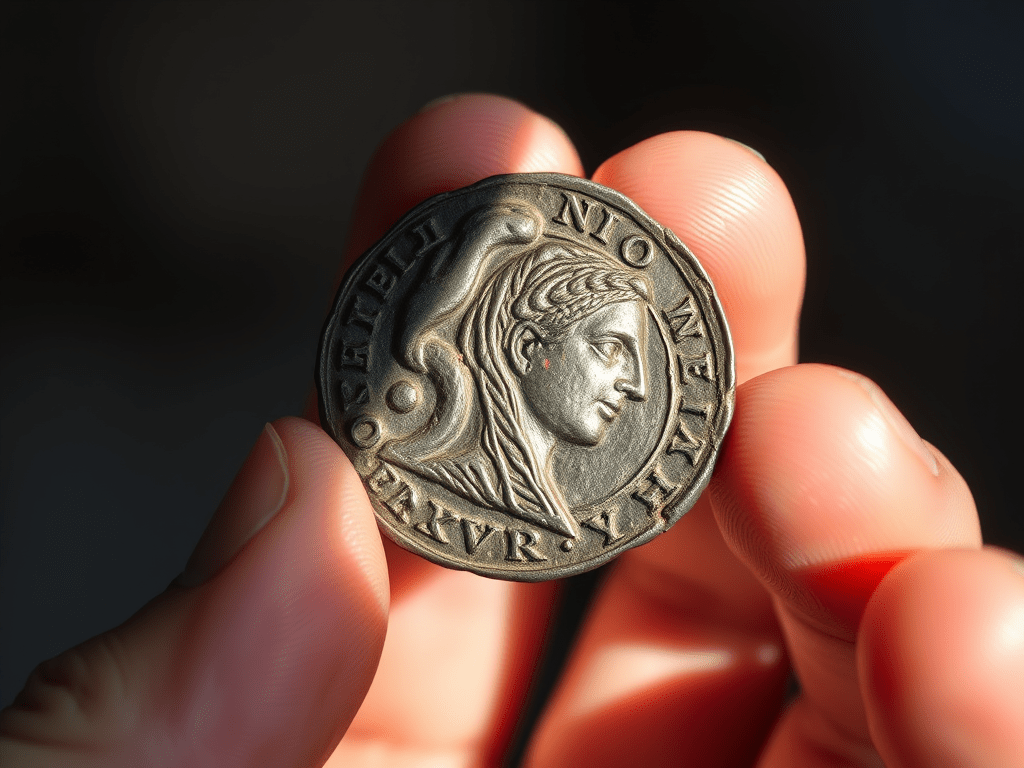
Torah: Exodus 30:11-34:35
Haftarah: I Kings 18:1-39
Long ago, the Jewish sages created reading calendars to be read annually throughout all the synagogues every sabbath. They are the Parsha (from the Torah, the first five books of the Bible), and the Haftarah (selected readings from the prophetic books of the Old Testament). Today, I continue my series exploring the Messiah in each of these portioned readings that was planned and scheduled in ancient days and appointed for our present days.
The Torah portion for March 7, 2026, Ki Tissa (When You Take) takes us through instructions for the half-shekel census, the bronze basin, the recipe for holy anointing oil, the recipe for holy incense, the commissioning of Bezalel and Oholiab to make everything associated with the tabernacle, Shabbat, the incident of the golden calf, Moses’ intercessions, the tent of meeting, God’s amazing proclamation of His covenant Name, the new tablets containing the ten commandments, a reiteration of already proclaimed commands, and Moses’ shining face. It’s a lot, but I’ll do my best to highlight Messiah in a few of these things.
The Half-Shekel Census and You
15 The rich shall not give more, and the poor shall not give less, than the half shekel, when you give the Lord’s offering to make atonement for your lives (Ex. 30:15).
The word atonement is mentioned more than once in this passage, signaling its significance. The Hebrew word is caphar, which means to cover. The Day of Atonement is Yom Kippur, or the Day of Covering. Kippur derives from caphar. Yom Kippur is all about atoning for the sins of the people. Verse 12 says the half-shekel is “a ransom for his life.” As soon as someone was old enough to be counted, regardless of social status or wealth, they paid a half-shekel. It was the same for everyone. No one was exempt. No one had to pay more. No one had to pay less. The census tax ransomed their lives. It atoned for their lives.
What does the New Testament have to say about ransom? There is an amazing chain here, if we follow it, that it takes us up to God’s final plan for the whole world. I will show you how Jesus is the ransom that atones for our lives, for Israel and the whole world..
First, Jesus Himself said He is the ransom: “the Son of Man came not to be served but to serve, and to give his life as a ransom for many” (Mt. 20:28). See also Mark 10:45). Second, the Apostle Paul says Jesus is the ransom, that he “gave himself as a ransom for all, which is the testimony given at the proper time” (1 Tim. 2:6). This passage affirms that He is the ransom for everyone. No one has to pay more. No one has to pay less. The blood of Jesus is enough for everyone who can be counted. I didn’t make that connection between the ransom and Jesus blood up, because thirdly, the Apostle Peter says Jesus’ blood is the ransom: “you were ransomed from the futile ways inherited from your forefathers, not with perishable things such as silver or gold, 19 but with the precious blood of Christ, like that of a lamb without blemish or spot” (1 Pet. 1:18-19). Fourth, the Apostle John sees a vision of the fulfillment of the ransom in heaven:
And they sang a new song, saying, “Worthy are you [the Lamb] to take the scroll and to open its seals, for you were slain, and by your blood you ransomed people for God from every tribe and language and people and nation (Rev. 5:9).
The half-shekel of silver ransom is a foreshadowing of the ransom of Jesus for our lives, everyone. In the Gospel of Matthew, there is a story about Jesus concerning this very commandment in Exodus 30. Apparently, while Jesus and His disciples were staying in Capernaum, the temple tax collectors were making their rounds.
24 When they came to Capernaum, the collectors of the two-drachma tax went up to Peter and said, “Does your teacher not pay the tax?” 25 He said, “Yes.” And when he came into the house, Jesus spoke to him first, saying, “What do you think, Simon? From whom do kings of the earth take toll or tax? From their sons or from others?” 26 And when he said, “From others,” Jesus said to him, “Then the sons are free. 27 However, not to give offense to them, go to the sea and cast a hook and take the first fish that comes up, and when you open its mouth you will find a shekel. Take that and give it to them for me and for yourself” (Mt. 17:24-27).
Jesus didn’t have to atone for His life. Jesus didn’t have to pay a ransom for His life. He was the Son. But He did it “not to give offense to them.” Similarly, Jesus was baptized not because He repented of any sin, but to “fulfill all righteousness” (Mt. 3:15). Jesus was also going to be the ransom for Peter’s life, the ransom of which Peter would later write of in 1 Peter 1:18-19. Jesus was using this situation with the temple tax to teach Peter of a greater spiritual meaning behind the temple tax, the eternal atonement and ransom for sin, that He was the Son, and that through Him Peter’s atonement, and everyone’s for that matter, was paid for. Even the way Jesus provided the shekel for Peter connects to the way Jesus would pay the ultimate ransom. Jesus had Peter get the shekel out of a fish he caught. Jesus elsewhere said, “For just as Jonah was three days and three nights in the belly of the great fish, so will the Son of Man be three days and three nights in the heart of the earth” (Mt. 12:40), referring to His own death and resurrection. Indeed, Jesus said He is greater than Jonah (Mt. 12:41). Jesus is the shekel. Jesus is the ransom.
Now the half-shekel did not atone for an Israelite’s life if it was not applied to him. The half-shekel could not ransom anyone’s life if it was not counted to them. Similarly, you have to apply Jesus’ payment for your life to yourself through faith. As it says concerning Abraham, “And he believed the Lord, and he counted it to him as righteousness” (Gen. 15:6).
Bezawhat? Oholawho?
2 “See, I have called by name Bezalel the son of Uri, son of Hur, of the tribe of Judah, 3 and I have filled him with the Spirit of God, with ability and intelligence, with knowledge and all craftsmanship, 4 to devise artistic designs, to work in gold, silver, and bronze, 5 in cutting stones for setting, and in carving wood, to work in every craft. 6 And behold, I have appointed with him Oholiab, the son of Ahisamach, of the tribe of Dan. And I have given to all able men ability, that they may make all that I have commanded you: 7 the tent of meeting, and the ark of the testimony, and the mercy seat that is on it, and all the furnishings of the tent, 8 the table and its utensils, and the pure lampstand with all its utensils, and the altar of incense, 9 and the altar of burnt offering with all its utensils, and the basin and its stand, 10 and the finely worked garments, the holy garments for Aaron the priest and the garments of his sons, for their service as priests, 11 and the anointing oil and the fragrant incense for the Holy Place. According to all that I have commanded you, they shall do” (Ex. 31:2-11).
I’m not sure how many Christians are familiar with these two guys, but I was the only one in my Sunday school class who was able to rattle off their names when they came up in the discussion. Typically, most people who meet me don’t expect me to know what I know or say what I say. I look younger than I am, and I’m a short, small woman. I don’t scream Bible expert. And I’m not. Maybe that’s why God uses me. Bezalel and Oholiab may seem like unlikely figures for us to learn something from also. They aren’t exactly the most exciting Bible story characters. They were no King David. They were no Daniel. They weren’t warriors or prophets or priests or kings. They weren’t judges or patriarchs or disciples. They were artists. And just like how God gifted every other man or woman whom He called to a special purpose, God gifted these two men with the “Spirit of God,” “intelligence,” “knowledge,” and “craftmanship.” Moreover, he also gave “to all able men ability” to help make what was needed to be made to match the pattern for the tabernacle God showed Moses on the mountain. It was going to take a team to make this tabernacle more than a dream.
Names are very important in the Bible, and the names of Bezalel and Oholiab are no different. Bezalel, in the most straightforward translation, means “In the Shadow of God.” The tabernacle, which he was commissioned to construct, would be a copy and shadow of the heavenly version and a shadow of the One Who was to come to whom it all attests, Jesus. The author of Hebrews said this long before me:
Now the point in what we are saying is this: we have such a high priest, one who is seated at the right hand of the throne of the Majesty in heaven, 2 a minister in the holy places, in the true tent that the Lord set up, not man. 3 For every high priest is appointed to offer gifts and sacrifices; thus it is necessary for this priest also to have something to offer. 4 Now if he [Jesus] were on earth, he would not be a priest at all, since there are priests who offer gifts according to the law. They serve a copy and shadow of the heavenly things. For when Moses was about to erect the tent, he was instructed by God, saying, “See that you make everything according to the pattern that was shown you on the mountain” (Heb. 8:1-5).
Again, this author says,
For since the law has but a shadow of the good things to come instead of the true form of these realities, it can never, by the same sacrifices that are continually offered every year, make perfect those who draw near (Heb. 10:1).
From the very beginning of God’s commissioning, the mystery of the tabernacle system as a shadow of the greater and truer priesthood and atonement was present in the name of the man God commissioned. Concerning holy days and diet, of which the Torah also speaks, some of which is in this particular portion, the Apostle Paul says, “These are a shadow of the things to come, but the substance belongs to Christ” (Col. 2:16-17).
I want to take a quick side step and point out that when the author of Hebrews wrote what he wrote, the temple system was still in effect and was still being participated in by believers: “every high priest is appointed to offer gifts and sacrifices; thus it is necessary for this priest also to have something to offer. 4 Now if he [Jesus] were on earth, he would not be a priest at all, since there are priests who offer gifts according to the law. They serve a copy and shadow of the heavenly things.” Believers could participate in the sacrificial system understanding its greater meaning once Christ had come, because even before Jesus, “it [was] impossible for the blood of bulls and goats to take away sins” (Heb. 10:4). If it was the act of animal sacrifice itself that pardoned people of sin, God would not have said this through Isaiah,
“When you come to appear before me,
who has required of you
this trampling of my courts?
13 Bring no more vain offerings;
incense is an abomination to me.
New moon and Sabbath and the calling of convocations—
I cannot endure iniquity and solemn assembly.
14 Your new moons and your appointed feasts
my soul hates;
they have become a burden to me;
I am weary of bearing them (Isaiah 1:12-14).
We just read in Exodus that God commanded these things! The motions without the faith in the One of Whom these things are a shadow of is an abomination. They were being done without faith in the Object casting the shadow, because “without faith it is impossible to please him” (Heb. 11:6). If the temple worshippers were acting in faith, then they would “cease to do evil, learn to do good; seek justice, correct oppression, bring justice to the fatherless, plead the widow’s cause” (Is. 1:16b-17).
Now that I’m off that soapbox, let’s look at Oholiab’s name. Does it have a clue about the Messiah? The answer is in the question. I wouldn’t bring it up if it didn’t. Oholiab means, “Father’s Tent.” And that’s what Jesus was. His body was the tent of the Father’s presence on earth. He tabernacled among us (Jn. 1:14). The Greek word in John chapter one translated at dwelt or lived is literally tabernacled. Jesus Himself said during Chanukkah in the temple, “I and the Father are one” (Jn. 10:30). So Jesus’ body was the tent of the Father, indeed, “the true tent that the Lord set up” (Heb. 8:2).
Bezalel’s name attests to the tabernacle system as a shadow of the greater and truer spiritual atonement of Jesus, and Oholiab’s name attests to the tabernacle’s truer meaning being found in the Tent of the Father, Jesus Christ, Yeshua ha Mashiach.
The Broken Covenant, the Broken Tablets, to the Third and Fourth Generation
19 And as soon as he came near the camp and saw the calf and the dancing, Moses’ anger burned hot, and he threw the tablets out of his hands and broke them at the foot of the mountain. 20 He took the calf that they had made and burned it with fire and ground it to powder and scattered it on the water and made the people of Israel drink it (Ex. 32:19-20).
The Israelite’s had already received the Ten Commandments verbally at the foot of Sinai, and one of those commandments was,
4 “You shall not make for yourself a carved image, or any likeness of anything that is in heaven above, or that is in the earth beneath, or that is in the water under the earth. 5 You shall not bow down to them or serve them, for I the Lord your God am a jealous God, visiting the iniquity of the fathers on the children to the third and fourth generation of those who hate me, 6 but showing steadfast love to thousands of those who love me and keep my commandments (Ex. 20:4-6).
The Israelite’s were without excuse for what they did. They knew. They received the words of God and chose to hate them. They gave their gold to Aaron to make an idol, and Aaron made a calf. Moses was coming with the Ten Commandments in writing, but he was taking too long for them, so they came up with their own system to replace it. Before Moses arrived with the Ten Commandments on stone cut and written upon by God Himself, they had broken them. As a consequence, Moses broke the tablets. Tradition teaches that these tablets were sapphire, clear as glass, written front and back but in such a way that the writing was never backward any way you looked at them. They were clear like the heavens. They were the color of the heavens. Tradition also teaches that God had set apart these tablets when He created the world, intended for this special purpose, the giving of His Torah. God waited until the right time to give His Torah on them.
Long before Jesus came, God foretold Him through His prophets. The people longed for the Messiah, but He was long in coming. The sins of Israel throughout the Old Testament testify to how they got tired of waiting on that promise, and they fashioned their own ideas, like the golden calf. The northern kingdom even literally made a golden calf again, two actually! The Torah was broken well before Jesus came. Like the first set of the Ten Commandments, Jesus came down from heaven like the purest of the heavens. He is, after all, the Word of God (see John chapter 1). Just like tradition teaches God set aside two sapphire tablet before He finished making the world, Peter says the plan of Jesus was set aside before the creation of the world: “He was foreknown before the foundation of the world but was made manifest in the last times for the sake of you” (1 Pet. 1:20). Jesus is like that first set of tablets that was broken. Because we broke God’s Law, Jesus had to be broken. This was God’s plan all along, which He waited to reveal until the right time, just like the tablets. As Isaiah prophesied,
Surely he has borne our griefs
and carried our sorrows;
yet we esteemed him stricken,
smitten by God, and afflicted.
5 But he was pierced for our transgressions;
he was crushed for our iniquities;
upon him was the chastisement that brought us peace,
and with his wounds we are healed.
6 All we like sheep have gone astray;
we have turned—every one—to his own way;
and the Lord has laid on him
the iniquity of us all (Is. 53:4-6).
Right after the Israelites broke the second commandment, which says He visits “the iniquity of the fathers on the children to the third and fourth generation of those who hate me, 6 but showing steadfast love to thousands of those who love me and keep my commandments,” God proclaims the same words to Moses on the mountain:
5 The Lord descended in the cloud and stood with him there, and proclaimed the name of the Lord. 6 The Lord passed before him and proclaimed, “The Lord, the Lord, a God merciful and gracious, slow to anger, and abounding in steadfast love and faithfulness, 7 keeping steadfast love for thousands, forgiving iniquity and transgression and sin, but who will by no means clear the guilty, visiting the iniquity of the fathers on the children and the children’s children, to the third and the fourth generation.8 And Moses quickly bowed his head toward the earth and worshiped (Ex. 34:5-8).
This seems oxymoronic. The Israelites just broke the commandment that required God visit their iniquity upon them to the third and fourth generation, but instead He forgave them. Moses interceded for them (many times, actually). God chose to be merciful and gracious to them. God chose to abound in steadfast love toward them. God chose faithfulness toward them, to forgive their iniquity and transgression and sin. How can He do that while still not clearing the guilty? Jesus. God visited our iniquity upon Jesus, thereby giving us grace and mercy and steadfast love and forgiveness. I’m not the first one to make this connection. The Apostle Paul wrote
21 But now the righteousness of God has been manifested apart from the law, although the Law and the Prophets bear witness to it— 22 the righteousness of God through faith in Jesus Christ for all who believe. For there is no distinction: 23 for all have sinned and fall short of the glory of God, 24 and are justified by his grace as a gift, through the redemption that is in Christ Jesus, 25 whom God put forward as a propitiation by his blood, to be received by faith. This was to show God’s righteousness, because in his divine forbearance he had passed over former sins. 26 It was to show his righteousness at the present time, so that he might be just and the justifier of the one who has faith in Jesus (Rom. 3:21-26).
God passed over former sins until Jesus came to actually pay for them. True believers of the past looked forward to that day. True believers since then look back on that day. By being broken because of the broken law, Jesus broke the generational curse upon every man and woman so God can instead show steadfast love to the thousands.
Shining Moses, Shining Jesus
29 When Moses came down from Mount Sinai, with the two tablets of the testimony in his hand as he came down from the mountain, Moses did not know that the skin of his face shone because he had been talking with God. 30 Aaron and all the people of Israel saw Moses, and behold, the skin of his face shone, and they were afraid to come near him. 31 But Moses called to them, and Aaron and all the leaders of the congregation returned to him, and Moses talked with them. 32 Afterward all the people of Israel came near, and he commanded them all that the Lord had spoken with him on Mount Sinai. 33 And when Moses had finished speaking with them, he put a veil over his face.
34 Whenever Moses went in before the Lord to speak with him, he would remove the veil, until he came out. And when he came out and told the people of Israel what he was commanded, 35 the people of Israel would see the face of Moses, that the skin of Moses’ face was shining. And Moses would put the veil over his face again, until he went in to speak with him (Ex. 34:29-35).
I think this is a cool story. Even as a youth, I wanted people to know I had spent time with the Lord because I had a glow about me. You know, when someone is happy or joyful or in love, you say they have a glow. But there is more to this story than just teaching us we can learn a thing or two from Moses by spending our own time with the Lord. This story has a very similar counterpart in the life and ministry of Jesus. This following story even ties in a person from the Haftarah! Read it for yourself, and then I’ll do a compare/contrast.
17 And after six days Jesus took with him Peter and James, and John his brother, and led them up a high mountain by themselves. 2 And he was transfigured before them, and his face shone like the sun, and his clothes became white as light. 3 And behold, there appeared to them Moses and Elijah, talking with him. 4 And Peter said to Jesus, “Lord, it is good that we are here. If you wish, I will make three tents here, one for you and one for Moses and one for Elijah.” 5 He was still speaking when, behold, a bright cloud overshadowed them, and a voice from the cloud said, “This is my beloved Son, with whom I am well pleased; listen to him.” 6 When the disciples heard this, they fell on their faces and were terrified. 7 But Jesus came and touched them, saying, “Rise, and have no fear.” 8 And when they lifted up their eyes, they saw no one but Jesus only (Mt. 17:1-8).
Jesus and his closest disciples went up a high mountain just like Moses went up a high mountain to meet with the Lord. Jesus’ whole being and clothing shone like Moses’ face shone, but this time it wasn’t Jesus shining because of interacting with God, it was Jesus shining because He was validated by God. Just like a cloud came down on Sinai to meet with Moses, a cloud descended upon this mountain and from it God’s voice validated Jesus: “This is my beloved Son, with whom I am well pleased; listen to him.” Just like Moses fell down and worshipped when God proclaimed Himself, and just like the Israelites fell down and proclaimed the Lord as God on Mount Carmel with Elijah when fire from heaven consumed the sacrifice, the disciples fell down when God proclaimed Jesus. Jesus met with Moses and Elijah on the mountain face-to-face just like how God met with Moses face-to-face, like a man who speaks with his friend (Ex. 33:11). God worked a miracle through Elijah on a mountain, Mount Carmel. Elijah was also the one other man God spoke with at Sinai (see 1 Kings chapter 19). Luke elaborates a little bit more about what Jesus was discussing with these two men again on this mountain: they “spoke of his departure, which he was about to accomplish at Jerusalem” (Lk. 9:31). They were going over His travel plans, His crucifixion, burial, resurrection, and ascension. At Sinai (Horeb), God spoke to Moses about His plans for the tabernacle in Exodus, and God spoke to Elijah about His faithfulness to Israel and the nations in 1 Kings. In the Gospels, Jesus talked again to these two men on a high mountain about the fulfillment of those plans in Himself as the “the true tent that the Lord set up” (Heb. 8:2) and as the ultimate plan of faithfulness to Israel and the nations.
Paul, in his second letter to the Corinthians, compares Jesus to the very stories in this parsha. I won’t quote it fully here. You can look it up and read it yourself. He compares this parsha to Jesus in that Jesus is the greater and truer fulfillment of the Torah. Jesus, speaking of Himself, also said, “I tell you, something greater than the temple is here” (Mt. 12:6). The tablets were broken. Moses, though his face shone, died. The tabernacle is gone. Jesus, though broken, was raised and is alive forever to whom the commandments attest. Just like how I opened this section with recounting how I longed to share that glow I caught spending time with the Lord, that opportunity is open for all. Remember, Moses took his veil off when He met with God, and that meeting made his face glow.
16 But when one turns to the Lord, the veil is removed. 17 Now the Lord is the Spirit, and where the Spirit of the Lord is, there is freedom. 18 And we all, with unveiled face, beholding the glory of the Lord, are being transformed into the same image from one degree of glory to another. For this comes from the Lord who is the Spirit (2 Cor. 3:16-18).
I pray that if you’re reading this, that you would turn to the Lord too, and if you already have, that you would continue to be transformed into His image of glory as you faithfully meet with Him in your daily walk of faith. Until next time, God bless.
There is a life to which I'm not yet born
That is more real than what I see or touch.
It will not end when this life becomes worn
Out and doesn't amount to very much.
You ransom me from this deceptive crutch,
This idol I erected in Your place,
And lead me to Your Promised Land with such
Wonders beyond concepts of time and space,
The source of lovingkindness, mercy, grace,
True Testimony told prior to all time.
You were broken so I won't be disgraced
In the Valley of Death's Shadow, though died,
When in the Shadow of Your Wings I hide.
Sources
“Bezalel meaning.” Abiram Publications. Bezalel | The amazing name Bezalel: meaning and etymology. Accessed 11 March 2026.
The Bible. English Standard Version. Biblegateway.com. Accessed 11 Mar. 2026.
“Oholiab meaning.” Abiram Publications. Oholiab | The amazing name Oholiab: meaning and etymology Accessed 11 March 2026.

 Valley Princess
Leave a comment