Torah: Genesis 47:28-50:26
Haftarah: 1 Kings 2:1-12
Long ago, the Jewish sages created reading calendars to be read annually throughout all the synagogues every sabbath. They are the Parsha (from the Torah, the first five books of the Bible), and the Haftarah (selected readings from the prophetic books of the Old Testament). Today, I continue my series exploring the Messiah in each of these portioned readings that was planned and scheduled in ancient days and appointed for our present days. For January 3, 2026, the readings are cited above. I would encourage you to read those passages first before you read my post, or at least read them in tandem.
I am very excited about this portion because it contains “one of the most widely accepted Messianic prophecies in Judaism” (Complete Jewish Study Bible, 66). The siddur (Jewish prayer book), the Targum of Onkelos, the Jerusalem Targum, and Rashi (a very notable rabbinic scholar) all consider this passage Messianic. I love finding common ground, and here we have some between Jews and Christians. Christians believe the Old Testament points to Christ (Messiah), but they may be hard pressed to explain where Christ is at the end of Genesis, and Jews believe this portion contains a Messianic prophecy.
This portion closes the book of Genesis with Jacob’s blessings on his children, including Joseph’s children. Like Isaac blessed him many years ago, it was now Jacob’s turn to bless his own children. He gave them all a blessing fit for each one as they would all be counted as part of the nation God would make of Abraham’s descendants one day. This is different than Jacob and Esau, because only one received the blessing. Now all the sons were included, even Ephraim and Manasseh, Joseph’s sons (Gen. 48:5-6). Jacob’s blessings are more dramatic: “Gather yourselves together, that I may tell you what shall happen to you in days to come” (Gen. 49:1). In Hebrew, what is translated as “days to come” in the EWnglish Standard Version (ESV) is acharit-hayamim, which literally means the end of the days, the last days or latter days. Jacob would tell his children the destiny of their descendants up into the last days. This family blessing just became an eschatological oracle. So let’s dig right into Genesis 49:8-12, where we find Messiah in the last days.
8 “Judah, your brothers shall praise you;
your hand shall be on the neck of your enemies;
your father’s sons shall bow down before you.
9 Judah is a lion’s cub;
from the prey, my son, you have gone up.
He stooped down; he crouched as a lion
and as a lioness; who dares rouse him?
10 The scepter shall not depart from Judah,
nor the ruler’s staff from between his feet,
until tribute comes to him;
and to him shall be the obedience of the peoples.
11 Binding his foal to the vine
and his donkey’s colt to the choice vine,
he has washed his garments in wine
and his vesture in the blood of grapes.
12 His eyes are darker than wine,
and his teeth whiter than milk.
Let’s first take a close look at verse 10. The part the ESV translated as “until tribute comes to him,” in Hebrew is literally, until Shiloh comes. I know, that probably sounds like I just made it more confusing than the translation, but there’s something here the ESV takes away, in my opinion. Shiloh can be a name. For example, Shiloh was the place name for where the tabernacle resided for a long time (1 Sam. 1:3). But besides a name, Shiloh means “to whom it belongs” (CJSB Glossary). So this phrase, if Shiloh is not a name here, more literally means, “until he comes to whom it belongs.” Until what belongs? The JSB (Jewish Study Bible) adds “obedience” in brackets, and the ESV uses “tribute,” but the antecedents before that include the concrete nouns for scepter and ruler’s staff, which are symbols of kingly reign. Therefore, the kingdom of Israel will not depart from Judah until the One to Whom the kingship really belongs comes.
Now this poses the next questions: Who is Shiloh? To whom does the kingship really belong? In this week’s haftarah, David, before his death, commissioned his son, Solomon,
“2Be strong, and show yourself a man, 3 and keep the charge of the Lord your God, walking in his ways and keeping his statutes, his commandments, his rules, and his testimonies, as it is written in the Law of Moses, that you may prosper in all that you do and wherever you turn, 4 that the Lord may establish his word that he spoke concerning me, saying, ‘If your sons pay close attention to their way, to walk before me in faithfulness with all their heart and with all their soul, you shall not lack a man on the throne of Israel.’ (1 Kgs. 2:2b-4).
Now David is descended from Judah. His father, Jesse, was a Bethlehemite (1 Sam. 16:1), and Bethlehem was a town of the tribe of Judah (Judges 17:7-9). The scepter and the ruler’s staff were given to him by God, and God made a covenant with him that his kingdom would last forever (2 Sam. 7:16) so long as his descendants remained faithful to God. Clearly they were not, ten tribes were torn from Rehoboam, David’s grandson, and the kingdom of Judah was taken from Judah during the Babylonian exile. But when Jesus came, He did walk in faithfulness with all His heart and soul (Mt. 5:17; Heb. 4:15), and He was the King. He was Shiloh. As Peter rightly pointed out, David died, and his tomb was nearby where he spoke at Pentecost such that he could point it out in his message (Acts 2:29). In fact, all his descendants who reigned died also. The right to the throne was passed on down the Davidic line until the one to whom the throne belongs came, referring back to Jacob’s blessing. That means if the one to whom the throne belongs has come, then the throne still belongs to him and always will. He will not pass it on to a descendant because his coming fulfills the “until.” If he has not come, then we are still waiting for him and the line of succession continues. But I would like to, as you might have guessed, argue that He has come and He lived and He lives still. Gabriel came to Mary, the mother of Jesus, and told her,
“31And behold, you will conceive in your womb and bear a son, and you shall call his name Jesus. 32 He will be great and will be called the Son of the Most High. And the Lord God will give to him the throne of his father David, 33 and he will reign over the house of Jacob forever, and of his kingdom there will be no end” (Lk. 1:31-33).
Jesus, therefore, is the One to Whom obedience, tribute, the scepter, the ruler’s staff, the throne belongs, and since He rose from the dead, He lives forever, and his reign continues forever. Well, where is He? If he was the true King, we would see Him and be aware of His rulership, right? David himself was anointed king years before Judah and Israel recognized Him as king, but he was still the anointed one, the messiah, the rightful king. Saul, whom God rejected, pursued him and any of his supporters until his end on Mount Gilboa. Just like His father according to the flesh, Jesus is the Anointed One, the Messiah, the King, but His throne is not yet established on earth. He has the authority, but He hasn’t claimed on it yet. The enemy, whom God has rejected (Ps. 53:5), pursues and tries to stamp out God’s people, the gospel, and believers in the gospel anywhere they go, until that enemy will meet his end on all the mountains of Israel (Ez. 38:21; 39:4). Let us be like Judah and the rest of Israel who received David as king and receive Jesus as our king.
Just like Jacob prophesied concerning the last days, Jesus, the King from Judah, came in the last days and will come again at the end of the last days. The author of Hebrews writes,
Long ago, at many times and in many ways, God spoke to our fathers by the prophets, but in these last days he has spoken to us by his Son, whom he appointed the heir of all things, through whom also he created the world (1:1-2).
This verse clearly says the “heir of all things,” that is, the one to whom it belongs, Shiloh, came in the last days, the acharit-hayamim.
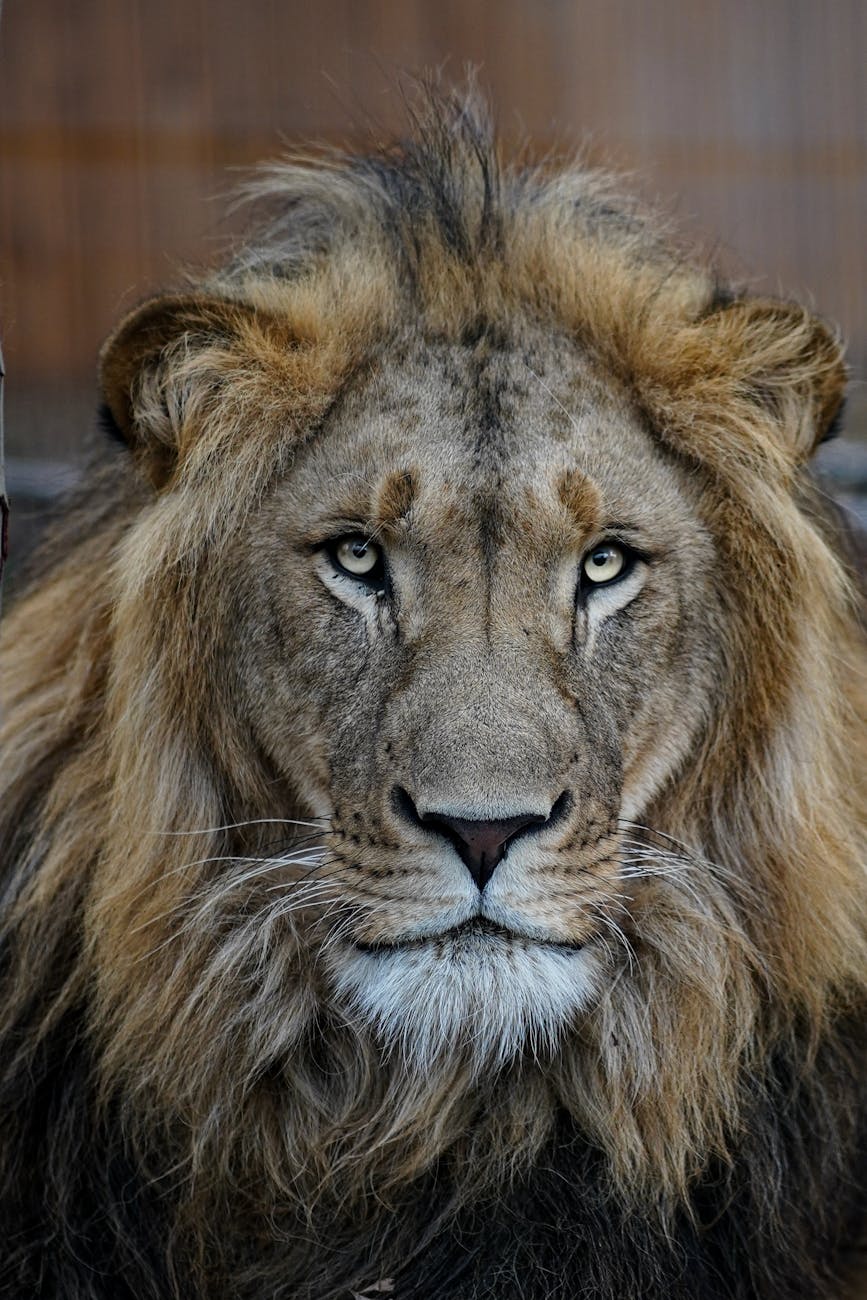
In Jacob’s blessing, Judah is described as a lion’s cub, a lion, and a lioness. These are images God used to describe himself in the prophets, and we can tie that into this Messianic prophecy and the Messiah Himself. First, God used the image of a lion to describe Himself as both a devourer and a protector. As a devourer of His enemies, He says through the prophet Hosea,
7 So I am to them like a lion;
like a leopard I will lurk beside the way.
8 I will fall upon them like a bear robbed of her cubs;
I will tear open their breast,
and there I will devour them like a lion,
as a wild beast would rip them open (13:7-8).
As a protecter of His people, He says,
How can I give you up, O Ephraim?
How can I hand you over, O Israel?
How can I make you like Admah?
How can I treat you like Zeboiim?
My heart recoils within me;
my compassion grows warm and tender.
9 I will not execute my burning anger;
I will not again destroy Ephraim;
for I am God and not a man,
the Holy One in your midst,
and I will not come in wrath.
10 They shall go after the Lord;
he will roar like a lion;
when he roars,
his children shall come trembling from the west;
11 they shall come trembling like birds from Egypt,
and like doves from the land of Assyria,
and I will return them to their homes, declares the Lord (11:8-11).
As God was described by the prophet Hosea as a lion, Jesus is described as a lion in Revelation. John had a vision of heaven. In heaven there was a scroll written inside and out, but it was sealed with seven seals, that is completely sealed, and no one could open it. It seems this went on long enough for John to begin losing hope and weep because no one could open it, nor was anyone worthy to open it. Then one of the elders in heaven approached John and said, “Weep no more; behold, the Lion of the tribe of Judah, the Root of David, has conquered, so that he can open the scroll and its seven seals” (Rev. 5:5b). This Lion Who is worthy is the one to whom it belongs. That Lion is Shiloh. That Lion is the One Who walked the faithful walk with all His heart and soul. That lion is Jesus. He is the root of David that was prophesied by Jacob to Judah long before the Davidic kingdom was established. Furthermore, Isaiah says, “In that day the root of Jesse, who shall stand as a signal for the peoples—of him shall the nations inquire, and his resting place shall be glorious” (11:10). Since Jesse is the father of David, if He is the root of Jesse, He is also the root of David.
All things He made declare His worthiness as Shiloh:
8 And when he had taken the scroll, the four living creatures and the twenty-four elders fell down before the Lamb, each holding a harp, and golden bowls full of incense, which are the prayers of the saints. 9 And they sang a new song, saying,
“Worthy are you to take the scroll
and to open its seals,
for you were slain, and by your blood you ransomed people for God
from every tribe and language and people and nation,
10 and you have made them a kingdom and priests to our God,
and they shall reign on the earth.”
11 Then I looked, and I heard around the throne and the living creatures and the elders the voice of many angels, numbering myriads of myriads and thousands of thousands, 12 saying with a loud voice,
“Worthy is the Lamb who was slain,
to receive power and wealth and wisdom and might
and honor and glory and blessing!”
13 And I heard every creature in heaven and on earth and under the earth and in the sea, and all that is in them, saying,
“To him who sits on the throne and to the Lamb
be blessing and honor and glory and might forever and ever!”
Jacob’s prophecy is fulfilled. Shiloh has come. The One to Whom all the authority belongs has come. He has conquered the enemy of sin on the cross, and one day he will come and vanquish all enemies, the last enemy being death (1 Cor. 15:26). When He comes, He will raise the dead to eternal life like He is eternally risen, and believers will live in His eternal kingdom where He is eternally king. But unlike the limitations of David’s throne, His kingdom will span the entire world. When He comes again, “to him shall be the obedience of the peoples,” (Gen. 49:10). This is not singular for a single nation, but it is plural, indicating multiple nations. The CJSB says, “The word until takes on an inclusive nature to suggest Y’hudah’s rule will be worldwide” (66). In Walter C. Kaiser’s book, The Messiah in the Old Testament, he argues, “he will govern, not only the nation of Israel, but all the nations of the world.” We see a shadow of this in the magi or wisemen who traveled to Jesus from the east, bringing gifts, and bowed down to worship Him(= (Mt. 2:1-12). The siddur says, “The scepter will not depart from Y’hudah, nor a scholar from among his descendants until Shiloh arrives and his will be the assemblage of the nations.” Rashi says Messiah’s kingdom is Adonai’s kingdom, and that “all will bring gifts to the Messiah, who is to be revered” (CJSB, 66).
This reign will be worldwide, but it will be centered in Jerusalem in Israel (1 Kgs. 21:7; 1 Chron. 23:25; 2 Chron. 33:4, 7; Rev. 21:1-3). Therefore, the part of the Abrahamic covenant promising the land of Israel to Abraham’s descendants must be fulfilled. Jacob said, “God Almighty appeared to me at Luz in the land of Canaan and blessed me, and said to me, ‘Behold, I will make you fruitful and multiply you, and I will make of you a company of peoples and will give this land to your offspring after you for an everlasting possession’” (Gen 48:3b-4). Joseph, before he died, also said to his brothers, “God will visit you and bring you up out of this land to the land that he swore to Abraham, to Isaac, and to Jacob” (50:24b). This promise is foreveran “everlasting possession,” just like the reign of the Messiah is forever. For the King of the Jews to reign in Israel, the Jews must be in Israel. That is why the enemy rages so strongly against this. Again, this is Biblical, not political. Time and time again, the parshah tells us every week through different Biblical passages that Israel is God’s people, always will be God’s people, that Israel is God’s land, always will be God’s land, and Israel is the source of God’s Messiah, always will be the source of the Messiah. Jacob, whom God Himself renamed Israel, prayed over Ephraim and Manasseh, “May they remember who I am and what I stand for, and likewise my fathers Avraham and Yitz’chak, who they were and what they stood for” (Gen 48:16, JSB). He and his family stood for something much bigger than themselves. They stood for the God of the Universe, the One Who is trustworthy and true, the King, the One Who remains faithful when we are faithless (Rom. 3:1; 2 Tim. 2:13). We cannot forget that Israel today still stands for the God of Israel, the same God Who is the Savior of the world through Jesus Christ, Yeshua ha Mashiach. The ESV translates verse 16 like this: “in them let my name be carried on, and the name of my fathers Abraham and Isaac.” For how long? According to Jacob’s blessings, it’s into the acharit-haymim, the last days. It’s not about deserving that standing with God. Jacob clearly admitted he was not worthy (Gen 32:10). It’s about His grace. Every single Jew is not a believer unto eternal salvation inasmuch as every “Christian” sitting on a church pew is saved. If God can reject Israel forever, then He can reject the church. That’s dangerous ground. Replacement theology is hogwash.
There is so much more here still concerning the colt and the garment covered in grapes in Jacob’s oracle, and if you hang with me just a little bit longer, I’m going to dig in some more before wrapping this up. Jacob says of Shiloh,
Binding his foal to the vine
and his donkey’s colt to the choice vine (Gen. 49:11).
Zechariah later prophecies this of Him:
Rejoice greatly, O daughter of Zion! Shout aloud, O daughter of Jerusalem! Behold, your king is coming to you; righteous and having salvation is he, humble and mounted on a donkey, on a colt, the foal of a donkey (9:9).
And He did come like this. Matthew tells us this story in his gospel:
1 Now when they drew near to Jerusalem and came to Bethphage, to the Mount of Olives, then Jesus sent two disciples, 2 saying to them, “Go into the village in front of you, and immediately you will find a donkey tied, and a colt with her. Untie them and bring them to me. 3 If anyone says anything to you, you shall say, ‘The Lord needs them,’ and he will send them at once.” 4 This took place to fulfill what was spoken by the prophet, saying,
5 “Say to the daughter of Zion,
‘Behold, your king is coming to you,
humble, and mounted on a donkey,
on a colt,[a] the foal of a beast of burden.’”
6 The disciples went and did as Jesus had directed them. 7 They brought the donkey and the colt and put on them their cloaks, and he sat on them. 8 Most of the crowd spread their cloaks on the road, and others cut branches from the trees and spread them on the road. 9 And the crowds that went before him and that followed him were shouting, “Hosanna to the Son of David! Blessed is he who comes in the name of the Lord! Hosanna in the highest!” (21:1-9).
Therefore, Jesus is the king from Judah, Shiloh, who came on the donkey when He rode into Jerusalem the week before His crucifixion.
Jacob also says,
“he has washed his garments in wine and his vesture in the blood of grapes” (Gen. 49:11b),
and God’s judgement on his enemies is likened to the image of a winepress. Now ancient winepresses looked more like stone tubs where they gathered the grapes and pressed out the juice with their feet. The liquid then ran out through a channel and was collected to distill into wine. Now the prophet Isaiah takes this metaphor and applies it to God’s judgement.
Who is this who comes from Edom,
in crimsoned garments from Bozrah,
he who is splendid in his apparel,
marching in the greatness of his strength?
“It is I, speaking in righteousness,
mighty to save.”
Why is your apparel red,
and your garments like his who treads in the winepress?
“I have trodden the winepress alone,
and from the peoples no one was with me;
I trod them in my anger
and trampled them in my wrath;
their lifeblood spattered on my garments,
and stained all my apparel.
For the day of vengeance was in my heart,
and my year of redemption had come.
I looked, but there was no one to help;
I was appalled, but there was no one to uphold;
so my own arm brought me salvation,
and my wrath upheld me.
I trampled down the peoples in my anger;
I made them drunk in my wrath,
and I poured out their lifeblood on the earth” (63:1-6).
Therefore Jacob’s blessing on Judah can be connected with the Messiah’s coming judgement that he will bring with His kingly authority. Take note also, that in this passage, God takes salvation into his own hands, not a sinful human, and Jesus is the Son of God. Therefore, the Shiloh in Jacob’s blessing is not a mere human, because on that day, “there was no one to help” and “there was no one to uphold,” so He treaded the winepress alone.
The first time Messiah came, He did not come in wrath and condemnation (Hos. 11:9, Jn. 12:47). He came to save the world. He came as a lamb (Is. 53:7; Rev. 5:6). He came humble on a donkey. When He comes again, He will come to judge the world as a lion. He will come and tread the winepress of the earth. Instead of two Messiah’s that come one time each, He is One Messiah Who comes twice. Joseph’s brothers, after they learned about the truth of him, that he became head over all Egypt, came and bowed down before him, offering themselves as servants, knowing they full and well deserved justice from the man whom they wronged. But he was not angry or condescending. Instead, Joseph said,
“…Do not fear, for am I in the place of God? 20 As for you, you meant evil against me, but God meant it for good, to bring it about that many people should be kept alive, as they are today. 21 So do not fear; I will provide for you and your little ones.” Thus he comforted them and spoke kindly to them (Gen. 50:19-21).
Similarly, there were Jews, brothers, kinsmen of Jesus, who plotted His death and exchanged His life for a criminal’s, Barabbas. After Peter’s message on Pentecost (Shavuot), he said as his conclusion,
“’36 Let all the house of Israel therefore know for certain that God has made him both Lord and Christ, this Jesus whom you crucified’…they were cut to the heart, and said to Peter and the rest of the apostles, ‘Brothers, what shall we do?’ 38 And Peter said to them, ‘Repent and be baptized every one of you in the name of Jesus Christ for the forgiveness of your sins, and you will receive the gift of the Holy Spirit. 39 For the promise is for you and for your children and for all who are far off, everyone whom the Lord our God calls to himself.’40 And with many other words he bore witness and continued to exhort them” (Acts 2:36-40b).
Just like Joseph, Jesus’ gospel was and is gracious and forgiving to even His enemies. Joseph’s brothers repented. The Jews who crucified Jesus repented. Not everyone repents though, obviously, and instead of mercy and grace, there must be justice for those who reject God’s justice on sin paid through Jesus.
When Jesus comes again, be ready to receive Him as King. Indeed, go ahead and receive Him today. The Lion will protect those Who are His and gather them to Himself, but He will destroy their enemies and His enemies as brutally as a lion tearing apart its prey. If Jesus is already your King, then pray for these things to come quickly, and I pray you will remain faithful unto Him. If He is not your King, I pray that you will consider these things for yourself and receive Him as King of your heart and King over your life. He is faithful to forgive anyone who confesses their sin and believes in Him (Rom. 10:9). He already defeated your enemy sin, and He gives you power over sin when you abide under His reign, and He will give you victory over death on the last day of the last days, the acharit-hayamim (Jn. 6:40).
Until Shiloh Comes
The Lion of Judah rises like the sun1
And Shiloh approaches us from the east2
To claim the kingdom by His blood He won,3
To shed the blood of every rival beast.4
The time is coming for the marriage feast.5
All the earth bows to confess Your Name.6
Your children recognize their Faithful Priest.7
You enemies are put to utter shame.8
The Lion Protector, gentle, but not tame,9
Came once to Israel humble on a colt,10
In blood-stained robes comes again to reclaim11
The earth from rebels Whom His rules revolt.
Arise quickly, Subject of heaven’s songs,12
The King, Shiloh, to Whom it all belongs.13
- Mal. 4:2
- Is. 41:1-4
- Rev. 5:9
- Hos. 13:7-8; Rev. 19:20
- Rev. 19:9
- Phil. 2:10
- Heb. 2:17
- Ps. 53:5; Lk. 13:17; Col. 2:15
- Gen. 49:9; Hos. 8:8-11, 13:7-8; Rev. 5:5
- Gen. 49:11; Zech. 9:9; Mt. 21:1-9
- Gen. 49:11; Is. 63:1-6
- Rev. 5:8-13
- Gen. 49:10
Sources
The Bible. English Standard Version. Biblegateway.com. Accessed 29 Dec. 2025.
The Complete Jewish Study Bible. Peasbody, Hendrickson Publishers, 2016.

 Valley Princess
Leave a comment