Torah: Leviticus 6:8(1)-8:36
Haftarah: Jeremiah 7:21-8:3; 9:23(22)-24(23)
I continue my series discovering the Messiah in the weekly Parsha schedule that might even go back to the time of Ezra, who began regular public readings of the Scriptures after the Babylonian exile. This post is about Tzav (Give an Order) which was scheduled to be read March 28, 2026. I’m behind, but I’m working on catching up.
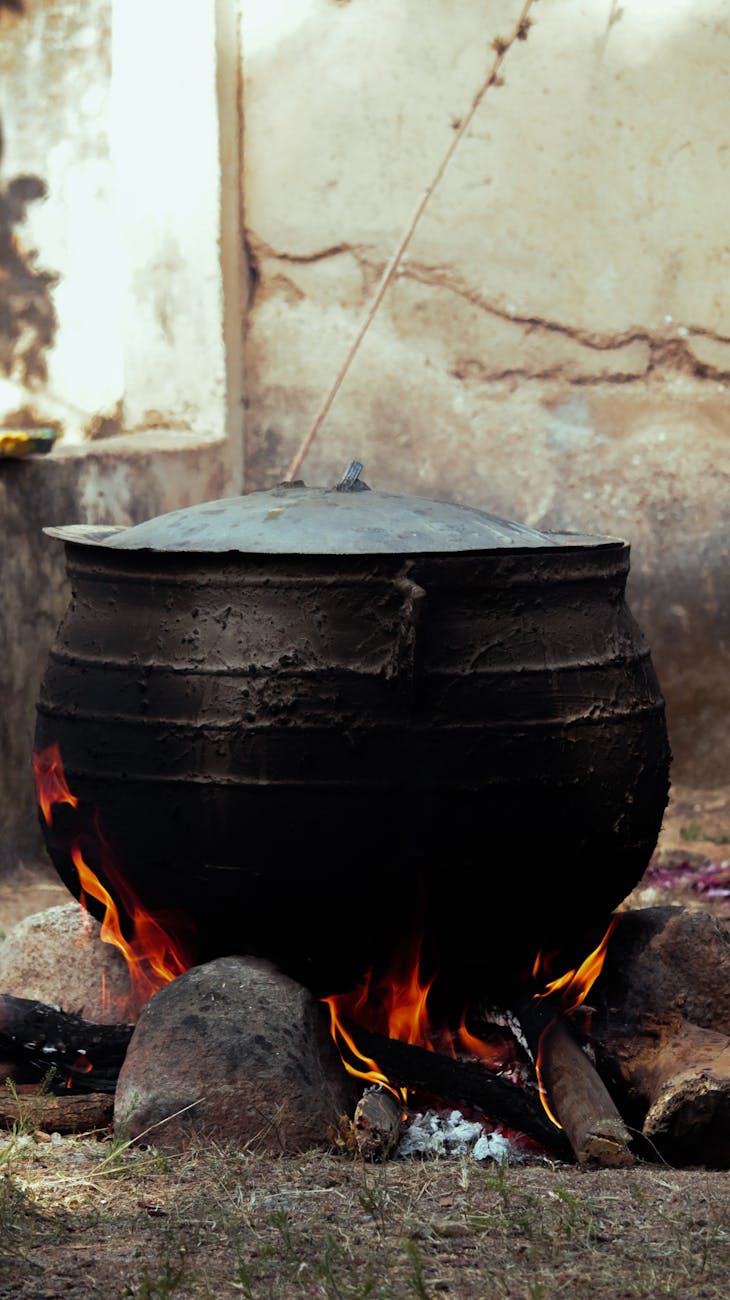
The Perpetual Fire
Fire shall be kept burning on the altar continually; it shall not go out (Lev. 6:13).
The priests were supposed to keep the fire burning on the great bronze altar continually with sacrifices. The lamb offered in the morning and evening every day regularly fueled the fire, in addition to all the other sacrifices according to their schedule and those voluntarily offered by the people. For the sin and guilt offerings, these animals were sacrificed in the place of the worshippers to remove their sin that deserved karat, being cut off.
But Israel wandered spiritually. Not only did they fail to keep Torah, but they adopted the practices of the pagan nations around them, including the worship of false gods. These false gods taught the people to sacrifice their children. The Torah taught the people to sacrifice animals to redeem their children (Ex. 13:15). Instead, the false gods in the images of animals taught the people to sacrifice their children. It was the complete opposite of Torah.
The chief location that became associated with this horrendous apostacy was Topheth the Valley of the Son of Hinnom (Heb. chinom, meaning “wailing”), which became known also as Gehenna (translated “hell” in the New Testament), where the Israelites took their children and offered them to the gods such as Molech and Baal by fire. Josiah defiled Topheth and made the valley a garbage dump (2 Kgs. 23:10). “The crematory fires of the valley, and the tradition that it was necessary to keep perpetual fires burning in order to consume the city’s rubbish,” made it the perfect image of hell (Family Bible Encyclopedia, 1300).
Isaiah 66:15-24 describes what will happen with the coming of the Lord “by fire” on the day He will “enter into judgement…with all flesh.” After that will be “the new heavens and the new earth” and the entire earth will come to God to worship Him. This is the same sequence of events given in Revelation chapter 20 and 21, by the way. Then Isaiah tells us where the rebels are:
“And they shall go out and look on the dead bodies of the men who have rebelled against me. For their worm shall not die, their fire shall not be quenched, and they shall be an abhorrence to all flesh” (vs. 24).
Jeremiah describes it similarly:
But if you do not listen to me, to keep the Sabbath day holy, and not to bear a burden and enter by the gates of Jerusalem on the Sabbath day, then I will kindle a fire in its gates, and it shall devour the palaces of Jerusalem and shall not be quenched (Jer. 17:27).
In Revelation, John calls the place the rebels go as the “lake of fire and sulphur where the beast and the false prophet were, and they will be tormented day and night forever and ever” (Rev. 20:10).
Jesus uses Isaiah’s verbiage in chapter 66 to describe hell, “where their worm does not die and the fire is not quenched” (Mk. 9:48).
So you probably see the connection between Isaiah 66, the Valley of the Son of Hinnom, and Jesus’ description of hell by now. But what does this have to do with Leviticus chapter 6? The sacrifices were offered on behalf or in place of the worshippers. If they do not have a sacrifice, they take the heat (pun intended). The Valley of the Son of Hinnom became a ground of human sacrifice. Hell is the ground of human sacrifices, the sacrifices of humans who did not rely on the sacrifice that God called for on their behalf. Hell is the garbage dump of the spiritual realm as the Valley of the Son of Hinnom became to the physical realm. But Jesus is the Sacrifice, and those who do not rely on His sacrifice ultimately result in sacrificing themselves to the fire that will never go out in Gehenna, hell, the lake of fire. That is not God’s will though. In the Torah, he meant for people to be redeemed by the sacrifice, not become the sacrifice. According to Ezekiel 33:11, God says, “As I live…I have no pleasure in the death of the wicked, but that the wicked turn from his way and live; turn back, turn back from your evil ways, for why will you die, O house of Israel?”
The bronze altar therefore becomes an image of the spiritual reality of hell. Rely on the sacrifice or become the sacrifice. Jesus is the Sacrifice. We can rely on Him so that we may be redeemed and not have to suffer the fires of hell that never go out. It’s interesting that Hinnom (chinom) means wailing, and Jesus described hell as “the fiery furnace” where “there will be weeping and gnashing of teeth,” which sounds pretty close to or synonymous with wailing (Mt. 13:42). Trust in Jesus as your sin offering so that you do not have to experience the fire that never goes out.
Jars of Clay
And the earthenware vessel in which it is boiled shall be broken (Lev. 6:28).
The sin offering could be boiled in an earthenware vessel, a clay pot, but afterward, the pot had to be broken. I find it fascinating that God gave Jeremiah the sign of a broken pot at the Valley of the Son of Hinnom to convey the coming judgment on Israel’s sin.
Thus says the Lord, “Go, buy a potter’s earthenware flask, and take some of the elders of the people and some of the elders of the priests, 2 and go out to the Valley of the Son of Hinnom at the entry of the Potsherd Gate, and proclaim there the words that I tell you. 3 You shall say, ‘Hear the word of the Lord, O kings of Judah and inhabitants of Jerusalem. Thus says the Lord of hosts, the God of Israel: Behold, I am bringing such disaster upon this place that the ears of everyone who hears of it will tingle. 4 Because the people have forsaken me and have profaned this place by making offerings in it to other gods whom neither they nor their fathers nor the kings of Judah have known; and because they have filled this place with the blood of innocents, 5 and have built the high places of Baal to burn their sons in the fire as burnt offerings to Baal, which I did not command or decree, nor did it come into my mind— 6 therefore, behold, days are coming, declares the Lord, when this place shall no more be called Topheth, or the Valley of the Son of Hinnom, but the Valley of Slaughter…10 Then you shall break the flask in the sight of the men who go with you, 11 and shall say to them, ‘Thus says the Lord of hosts: So will I break this people and this city, as one breaks a potter’s vessel, so that it can never be mended. Men shall bury in Topheth because there will be no place else to bury” (Jer. 19:1-6, 10-11).
This, by the way, amazingly, is the same judgment on the same sin in this week’s Haftarah (Jer. 7:21-8:3). I did not even realize it until after I wrote this. I believe that is confirmation to me that God is guiding my mind as I write.
In Leviticus, the vessel of the sin offering is broken on behalf of the worshipper, but in Jeremiah, the rebels are broken like a clay pot instead. Again, the message seems the same. Trust in the offering or become the offering.
The Apostle Paul likens the power of the gospel in the bodies of believers to earthen vessels:
2 But we have renounced disgraceful, underhanded ways. We refuse to practice cunning or to tamper with God’s word, but by the open statement of the truth we would commend ourselves to everyone’s conscience in the sight of God. 3 And even if our gospel is veiled, it is veiled to those who are perishing. 4 In their case the god of this world has blinded the minds of the unbelievers, to keep them from seeing the light of the gospel of the glory of Christ, who is the image of God. 5 For what we proclaim is not ourselves, but Jesus Christ as Lord, with ourselves as your servants for Jesus’ sake. 6 For God, who said, “Let light shine out of darkness,” has shone in our hearts to give the light of the knowledge of the glory of God in the face of Jesus Christ. 7 But we have this treasure in jars of clay, to show that the surpassing power belongs to God and not to us. 8 We are afflicted in every way, but not crushed; perplexed, but not driven to despair; 9 persecuted, but not forsaken; struck down, but not destroyed (2 Cor. 4:2-9).
Paul and the believers are the opposite of the Israelites in the Valley of the Son of Hinnom. They have renounced the disgraceful ways that bring condemnation. Instead, they treasure the light of the gospel of Jesus Christ that abides in their “jars of clay” that cannot be crushed nor destroyed by persecution or strikes from the enemy. Because they trust in the gospel, their vessels are not broken.
But Leviticus 6 requires the vessel of the sin offering be broken. What of that? Well, if Jesus is the sin offering, He’s the One Who is broken. Isaiah 53:5 says, “he was crushed for our iniquities.” At the Last Supper, Jesus broke the bread and then said it was His body broken for us (1 Cor. 11:24). His body, His earthenware vessel, in which the sin offering was cooked, was broken.
Earthenware vessels are Biblical imagery for the human body. When God created humans, he took earth and fashioned man out of it (Gen. 2:7). See also Jeremiah chapter 18 and Romans 9:19-23 for more context concerning a clay pot representing people. Jesus’ body was broken as the vessel containing the sin offering. If we don’t rely on that, we wind up becoming the broken vessels for our sins like the Israelites in Jeremiah 19.
When the Profane Touches the Holy
Whatever touches its flesh shall be holy (Lev. 6:27).
Whatever touched the sin offering became holy. If we continue to consider Jesus as the fulfillment of the sin offering, this reminds me of a couple of stories in the New Testament.
20 And behold, a woman who had suffered from a discharge of blood for twelve years came up behind him and touched the fringe of his garment, 21 for she said to herself, “If I only touch his garment, I will be made well.” 22 Jesus turned, and seeing her he said, “Take heart, daughter; your faith has made you well.” And instantly the woman was made well (Mt. 9:20-22).
Like the sin offering that made whatever it touched become holy, Jesus made people clean by his touch. Following is another example:
8 When he came down from the mountain, great crowds followed him. 2 And behold, a leper came to him and knelt before him, saying, “Lord, if you will, you can make me clean.” 3 And Jesus stretched out his hand and touched him, saying, “I will; be clean.” And immediately his leprosy was cleansed. (Mt. 8:1-4).
Mark also says, “And immediately the leprosy left him, and he was made clean” (Mk 1:42). Again, just by touch, Jesus makes what is unclean clean. Ritual cleanliness and holiness are intertwined in the Torah.
All of us are unclean in one way or another, but Jesus, as the sin offering, can make you clean, make you holy with His touch. Mark says, “he had healed many, so that all who had diseases pressed around him to touch him” (3:10). Press into Him today, for He wills to cleanse you and heal you. He does not show partiality, for when “the crowd sought to touch him…power came out from him and healed them all” (Lk. 6:19). Jesus healed ALL who sought to touch Him. Seek Him.
When You Can’t Partake of the Offering
20 but the person who eats of the flesh of the sacrifice of the Lord’s peace offerings while an uncleanness is on him, that person shall be cut off from his people. 21 And if anyone touches an unclean thing, whether human uncleanness or an unclean beast or any unclean detestable creature, and then eats some flesh from the sacrifice of the Lord’s peace offerings, that person shall be cut off from his people” (Lev. 7:20-21).
An unclean person could not eat of the peace offering. He deserved to be cut off, or karat. Likewise, as we compare Jesus’ body to the rules for sacrifices, we should see these principles translate to the conduct of the Church, and they do.
27 Whoever, therefore, eats the bread or drinks the cup of the Lord in an unworthy manner will be guilty concerning the body and blood of the Lord. 28 Let a person examine himself, then, and so eat of the bread and drink of the cup. 29 For anyone who eats and drinks without discerning the body eats and drinks judgment on himself. 30 That is why many of you are weak and ill, and some have died. 31 But if we judged ourselves truly, we would not be judged. 32 But when we are judged by the Lord, we are disciplined so that we may not be condemned along with the world (1 Cor. 11:27-32).
Eating and drinking the Lord’s Supper “in an unworthy manner” is like partaking of the peace offering with an uncleanness on you. The consequence could be as severe as death, similar to the consequence of being cut off in the Levitical law, which many times entailed the death penalty. Just as worshippers partaking of offerings at the tabernacle were expected to keep themselves ritually clean, Christians should be expected to maintain a spiritual cleanness:
27 Religion that is pure and undefiled before God the Father is this: to visit orphans and widows in their affliction, and to keep oneself unstained from the world (James 1:27).
The Haftarah says this about such things:
23 Thus says the Lord: “Let not the wise man boast in his wisdom, let not the mighty man boast in his might, let not the rich man boast in his riches, 24 but let him who boasts boast in this, that he understands and knows me, that I am the Lord who practices steadfast love, justice, and righteousness in the earth. For in these things I delight, declares the Lord” (Jer. 9:23-24, ESV).
Believers should practice grace (steadfast love), justice, and righteousness in their own lives by loving others in need in practical ways that bless them, such as taking care of orphans and widows. Appropriating Jesus’ righteousness while living in an unworthy manner asks for negative consequences.
The Vain Sacrifice
17 But what remains of the flesh of the sacrifice on the third day shall be burned up with fire. 18 If any of the flesh of the sacrifice of his peace offering is eaten on the third day, he who offers it shall not be accepted, neither shall it be credited to him. It is tainted, and he who eats of it shall bear his iniquity (Lev. 7:17-18).
The sacrifice could not remain until the third day. It had to be taken care of by then. I think this has profound significance in relation to Messiah:
3 For I delivered to you as of first importance what I also received: that Christ died for our sins in accordance with the Scriptures, 4 that he was buried, that he was raised on the third day in accordance with the Scriptures (1 Cor. 15:3-4).
Perhaps Leviticus 1:17-18 is one of the Scriptures Paul was thinking of when he penned this. On the third day, the vow or voluntary peace offering would be rejected if any remained. It would not be accepted nor credited to the person offering it. It would be disgusting. Jesus could not stay in the tomb on the third day. He would not be an acceptable sacrifice for us if He did, and anyone who is a believer and says Jesus did not rise from the dead cannot be covered by His sacrifice. Anyone who keeps Him in the grave cannot have His credit applied to them. To be a saved believer, you have to believe He rose from the dead on the third day.
12 Now if Christ is proclaimed as raised from the dead, how can some of you say that there is no resurrection of the dead? 13 But if there is no resurrection of the dead, then not even Christ has been raised. 14 And if Christ has not been raised, then our preaching is in vain and your faith is in vain. 15 We are even found to be misrepresenting God, because we testified about God that he raised Christ, whom he did not raise if it is true that the dead are not raised. 16 For if the dead are not raised, not even Christ has been raised. 17 And if Christ has not been raised, your faith is futile and you are still in your sins (1 Cor. 15:12-17).
The sin offering cannot remain beyond the third day or it will not be accepted. Christ could not stay in the grave beyond the third day and be an acceptable sacrifice for us. But He did not remain. He rose on the third day and therefore we are accepted by God and His sacrifice is credited to us.
This is not a comprehensive explication of Parsha Tzav, but I hope I hit some of the highlights in relation to Messiah. Trust in Jesus as the sin offering, that He was raised on the third day, and live a holy life; Parsha Tzav shows us the way to avoid the perpetual fire and find acceptance with God in Messiah. Until next time, God bless.
The fire is never quenched but always burns
On His altar and in Topheth, his hell,
The one detestable because he spurns
The order God provided thus to quell
The wrath of Righteousness from which he fell.
Bur for the soul who seeks, desires a way
To flee the putrid valley, refuse smell,
A sin Offering in a jar of clay
Was broken and then raised on the third day
To make the unclean clean, profane holy
So that the wise may in His temple stay,
Boasting in His wealth and power only,
Practicing grace, justice, righteousness too,
As Scripture was, is, ever will be true.
Sources
The Bible. English Standard Version. Biblegateway.com. Accessed 20 Apr. 2026.
The Complete Jewish Study Bible. Peabody, Hendrickson Publishers, 2016.
The Family Bible Encyclopedia: Volume 7. New York, Curtis Books, 1972.

 Valley Princess
Leave a comment