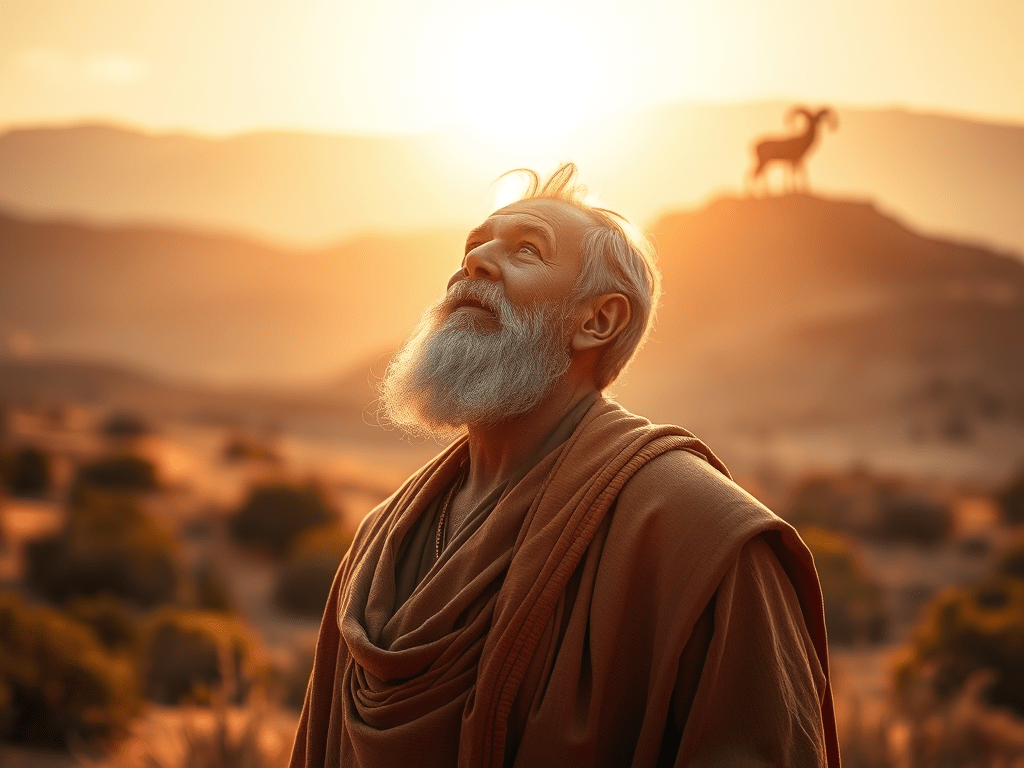
Torah: Genesis 18:-22:24
Haftorah: 2 Kings 4:1-37
“And Sarah conceived and bore Abraham a son in his old age at the time of which God had spoken to him” (Gen. 21:2).
“For while we were still weak, at the right time Christ died for the ungodly” (Rom. 5:6).
Long ago, the Jewish sages created reading calendars to be read annually throughout all the synagogues every sabbath. They are the Parsha (from the Torah, the first five books of the Bible), and the Haftarah (selected readings from the prophetic books of the Old Testament). Today, I continue my series exploring the Messiah in each of these portioned readings that was planned and scheduled in ancient days and appointed for our present days. For November 8 this year, the readings are cited above. I would encourage you to read those passages first before you read my post, or at least read them in tandem.
This week’s Torah reading covers the same passage that was read not long ago for Rosh Hashanah, the binding of Isaac. In my post for the readings of Rosh Hashanah, “Rosh Hashanah: Isaac, Ishmael, and the Well,” I discuss how Jesus is the Lamb which Abraham prophesied about when Isaac asked him where the lamb was. I say this because it was a ram that Abraham offered in his son’s place on the mountain, not a lamb, and God promised all nations would be blessed through Abraham, ultimately through the Messiah, which is Jesus. Without repeating myself here, I would like to add a little more concerning this week’s reading to reinforce that claim.
Abraham was a model of faith, though with mistakes, but that did not stop God from fulfilling His promise to Abraham, to bless all the earth through him and make him a great nation through his marriage with Sarah and their son, Isaac. After God promised him that He would visit them in about a year and that Sarah would have a son, Abraham gave his wife to Abimelech as a wife out of fear for his life. Well, if Abimelech kept Sarah or even had marital relations with her even one time, that would have messed up God’s very specific plan He told Abraham.
God mercifully gave Abimelech a dream, warning him to stay away from Sarah because she was Abraham’s wife, and Abimelech was God-fearing enough to take the dream to heart and believe it. In Abraham’s weakness, his fear, God mercifully upholds His will by intervening.
The Apostle Paul, in his letter to the church of Rome, uses Abraham as an example of saving faith in God, the kind of faith that justifies an imperfect person before a perfect God. Right after describing Abraham’s walk as an example, he writes, “For while we were still weak, at the right time Christ died for the ungodly.” Paul seems to be saying to the Roman church that they are not better than Abraham, they cannot be saved by being good people either, they are weak like Abraham was weak, but that did not stop God from fulfilling His plan of salvation for us, the world, the weak, the ungodly. Today, those same words ring just as true for Christians (and the whole world for that matter) as they did for the first century Christians in Rome. 1 Timothy 2:18 says, “if we are faithless, he remains faithful—for he cannot deny himself.”
There is an important truth in this passage that I believe can be easily overlooked but deserves attention: The ram represents the shadow of reality, the sacrificial system that foreshadows the ultimate sacrifice. Abraham looked behind him and found a ram. Abraham earlier looked up and ahead and saw the mountain God showed Him for the sacrifice, which is Mount Moriah, the same mountain Jesus was crucified on. The animal sacrificial system was for a time, now behind believers, figuratively speaking, while Jesus’ atonement on Mount Moriah on the cross is ever before us if we just look up. Even before the Torah was written, people had an understanding that the sacrifice of life was required for reconciliation with God, hence Abraham sacrificed animals to God, as did Noah and Abel. Animal sacrifices were never meant to really take away sin, but to foreshadow the sacrifice that would take away sin, as it says in Hebrews,
For since the law has but a shadow of the good things to come instead of the true form of these realities, it can never, by the same sacrifices that are continually offered every year, make perfect those who draw near. Otherwise, would they not have ceased to be offered, since the worshipers, having once been cleansed, would no longer have any consciousness of sins? But in these sacrifices there is a reminder of sins every year. For it is impossible for the blood of bulls and goats to take away sins” (10:1-4).
That is why God provided, at the time, a ram for Abraham to sacrifice instead of his son, and the lamb which he prophesied of would come later, at the right time. Whereas God spared Abraham’s beloved son, God gave His own beloved Son (Jn. 3:16; Mt. 3:17, 17:5). Abraham was saved from having to kill his own son, but God put His own Son to death (Is. 53:10). Isaac was bound. Jesus was bound (Mt. 27:2). Isaac carried the wood for the sacrifice. Jesus carried the wood for the sacrifice, His cross (Jn. 19:17). Isaac was escorted with a knife and a torch, the weapon and the fire for the sacrifice. Jesus was escorted from the Mount of Olives at the time of His betrayal by soldiers carrying weapons and torches (Jn. 18:3). I personally believe the similarities are staggering, and I’m just sticking with Scripture, not even getting into Jewish traditions about Yom Kippur, the Day of Atonement. All people can be saved from the guilt and punishment of sin by believing in the sacrifice of God’s Son on their behalf. God counted Abraham as righteous through faith, and God counts all believers as righteous through their own faith.
If you come away with one thing from this post, remember that God’s timing is perfect, His promises are true, and He will bring about His promises no matter what we do to help or hurt them. Just as Isaac’s birth was appointed, so was Jesus’. Just as Isaac’s symbolic sacrifice was appointed, so was Jesus’ real sacrifice. My aunt recently told me, several times in the same visit, actually, that God is a God of precision. If the binding of Isaac is an example at all, He indeed is. Below is a sonnet I wrote about these things. I hope you read and enjoy. Until next time, God bless.
Abraham
The father and his one beloved son
Travailed the mountain three days to its top.
The father knew what God said must be done.
A burnt off’ring the boy would be lest stopped.
From a distance they saw the place, outcrop
Of rock for the sacrifice, by God shown.
The fire and knife in hand, he couldn’t drop
It now. His own son now was not his own,
Bound, on arranged altar wood, lying down.
His past question rang through the father’s mind,
“It’s all here, but where’s the lamb? Have you known?”
“God will provide,” he answered, then behind
Him was most beautiful, majestic ram,
Though not the lamb, no, Jesus was the Lamb.

 Valley Princess
Leave a comment