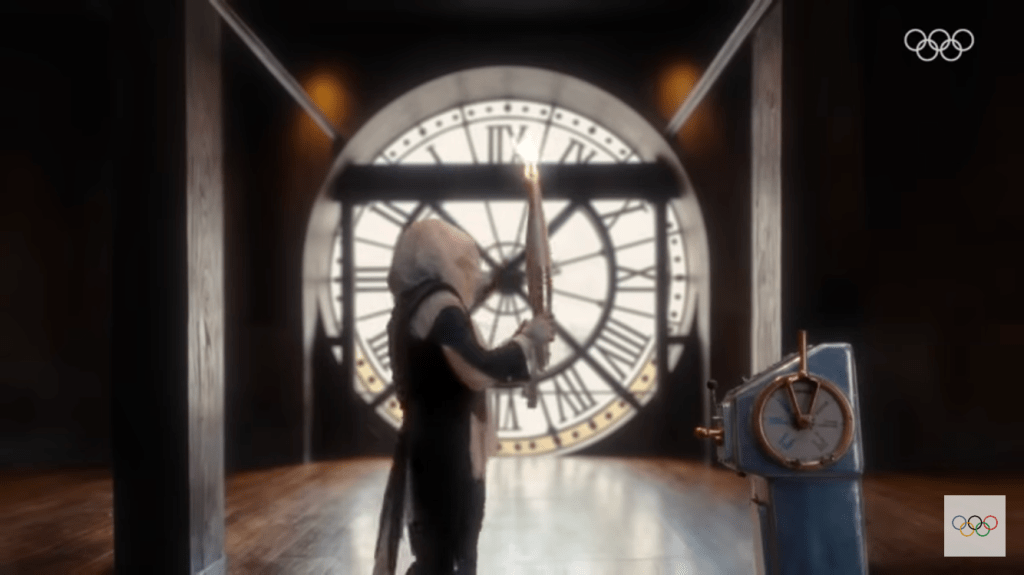
This post is the third in a series that I am doing on the 2024 Paris Olympic opening and closing ceremonies. So far, I have covered an interpretation of the prominence of the river as the stage for the opening ceremony in my post “An Interpretation of the Use of Rivers in the 2024 Paris Olympic Ceremonies”, and I have covered an interpretation of the use of wings and light in the wings in my post “An Interpretation of the Symbolic Meaning of Angel Wings and Light in the 2024 Paris Olympics.” I am approaching my interpretation from a Biblical worldview, and I am primarily using The Bible and Greek mythology to ground my interpretation. My basic argument is that the opening and closing shows are demonic, and if understood cohesively, they provide the narrative of fallen angels gaining power over the world and controlling it. Ultimately, such control leads to the condemnation of human souls to hell, or to use Greek terms (since we are talking about the Olympics), Hades. Christians and believers need to stay watchful, vigilant, prayerful, active in faith, and unstained from the world (James 1:27). Today, I will take a deeper look at a character I have already analyzed a lot in my first post and some in my second post: the hooded oarsman/torchbearer. In my first post, I explained how he is tied to the Greek god Charon who ferries souls across the Styx into Hades, and even is similar to Molech, who accepted child sacrifices as a gift from his worshipers. This appears to be the most complex character of the entire show. He weaves in and out of the show from the beginning with the children at the underground river, to his triumphal dance on the runway/table that Christians say is a mockery of Jesus’ Last Supper. My goal in this post is to explain how demonic this character really is through 1) analyzing his entrance to the show and his final performance, and 2) more deeply explaining his demonic or supernatural abilities, which are a) superhuman mobility in space and time, and b) his ability to go unnoticed by any others except for (what I argue are) other spiritual beings as he influences the show’s events..
First, I will explain a little more about the significance of the initial appearance of the oarsman/torchbearer. I have already mentioned how it is worth noting that his appearance is after three children descend into the subway, get the torch, then carry it through catacombs to an underground river, where the oarsman meets them and invites them into the boat. I argued that this is symbolic of Charon taking the children’s souls into death. I will now expand on this argument and how this same figure also connects with the Canaanite god Molech mentioned in the Bible.
Molech was the Canaanite god most noted for receiving child sacrifices from his worshippers. Baal is also known for receiving child sacrifices, but Molech seems to have required them in much greater volumes and frequency than Baal. Perhaps they are tied to the same patriarchal god since the Hebrew for Molech means king and Baal is Hebrew for Lord. We’ll never really know for sure. Whether they are the same deity or not doesn’t really matter to my argument. The Olympic show was demonic. Assuming Molech is a separate deity, we see him in the unfolding of the show’s narrative receiving children to convey across the underground river. A man who carried the torch into the subway passes it to the children and sends them forth to reach the river and meet the oarsman/torchbearer. In ancient child sacrifice, the men offered the children to the god.
Not only were the children offered to Molech or Baal by men, but they were offered with fire. The children were burned to death. The children were placed on the outstretched arms of the red hot idol. In the Olympic opening ceremony, you see the hooded oarsman extend its hand for the children who come with the fire.
If you think it is a stretch to compare Greek and Canaanite religion to a French Olympic ceremony, please understand this: First, the French use ancient Greco-Roman pagan mythology all throughout the show (and Greco-Roman religion was practiced in France before it was Christianized). In 2023, archaeologists excavated a 2,000-year-old cemetery along the Seine in Paris known as St. James Necropolis. It was feet away from a train statin (Remember the man in the show passing the torch to children in the train station?). In the cemetery, people were buried with treasures to bribe the ferryman of the underworld. At least one person was buried with a coin in his mouth, a practice called “Charon’s obal”. Secondly, the Olympics were originally Greek, done in honor of the gods. Thirdly, an idol of Molech has recently appeared outside the Roman Colosseum in our century.
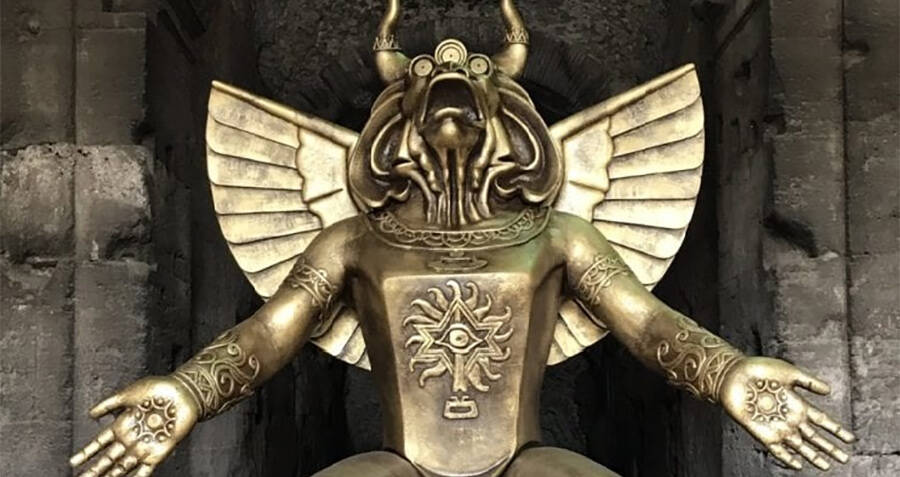
Just as Molech was seen with Greek paganism at the Colosseum, now too in modern times, the underworld river (Styx) is merged with the Seine in the Olympics show when the boat with the oarsman and children emerge on the surface for the live audience to see, right after the words on the screen “ca ira,” which means “it’ll be fine.” Later in the show, the beheaded Marie Antoinette sings that. It’ll be fine? Really?
The hooded oarsman then takes the torch from the children and takes off through the city with it, holding the torch for the longest out of anyone. His debut in the show sets the stage for interpreting his identity, where he came from, and what he’s about. He’s a demon from the underworld linked to death and child sacrifice.
Now I will jump ahead to the significance of the oarsman’s/torchbearer’s final debut in the Olympic opening ceremony. I don’t understand the songs in French that various music artists perform during this part of the show but I don’t have to speak French or any other language to understand their parody of the Last Supper. This is arguably the climax of the show. They replaced Jesus’ place with what looks to me like a feminine Budda-type figure making a heart with her hands. She has the aura around her head, a sign of divinity. This scene is introduced with the superimposed word “festivite” or “festivity” on the screen. The disciples are replaced with drag queens. Da Vinci’s supper table becomes a runway for a fashion show with models making crude dance moves and exhibiting inappropriate clothing, including cross dressing. This is where I just had to put the video down for a while because it is so bad. It is Sodom and Gomorrah or even worse. They put this feature right in the middle of the Olympic opening ceremonies. Just as Christ’s coming is the central point by which we reference time (AD, BC), they put this mockery in the middle of the show to profane it. The runway “models” sit down at the table on both sides and treat it like a table again, and this is the setting for the final performance of the oarsman/torchbearer in the opening ceremony. He appears and slowly ascends the steps, then quickly begins to dance across it, finally ending his routine at the other edge of the “table.” He leaps sideways on his feet and his one free hand like an animal. In the closing ceremony, the Golden Voyager will crouch in animalistic positions too.
In the Bible, Satan enters Judas at the Last Supper and Jesus sends him away before they have the third cup of the Passover seder, over which he says it is His blood, which is the cup of redemption, and before Jesus breaks the matzo he calls His body, which is the afikomen. In an inversion of this event, it’s like Satan returns to dance on the table that he was sent away from, to trample on the the symbol of God’s victory over him: the body and blood of the Son of God.
“Unie dans la diversite” or “united in diversity” is superimposed next on the Last Supper table before absolute chaos ensues and I just have to look away from it all. These words are in a completely different font, which is noteworthy. After their runway orgy, Bacchus appears on the runway/table to the word “obscurite” or “darkness.” Uh, why? It only makes sense if you interpret this in a spiritual way. It is spiritual darkness. Bacchus is the god of wine and drunkenness (and the father of the goddess Sequana, the river rider that we will see next in the show). Drunkenness is a Biblical metaphor for spiritual stupor and punishment. As one example, see Job 12:22-25:
22 He [God] uncovers the deeps out of darkness
and brings deep darkness to light.
23 He makes nations great, and he destroys them;
he enlarges nations, and leads them away.
24 He takes away understanding from the chiefs of the people of the earth
and makes them wander in a trackless waste.
25 They grope in the dark without light,
and he makes them stagger like a drunken man.
After Bacchus appears, dancers on an LED screen ferry below the bridge go into a frenzy (kind of like demon possession), then look like zombies, then go into another frenzy, until the floor flashes like lightning, cracks like a volcanic eruption, and they all fall down “dead” one by one into a digital lava flow. Again, why? Maybe it’s the darkness taking people to hell with it. Do you have a better explanation?
This is the setting for the final performance of the oarsman/torchbearer in the opening ceremony, and next the show introduces and features the next character I argue is part of the demonic triad. I don’t know how to interpret this any other way than one spiritual darkness concludes its roll to introduce another. The oarsman’s/torchbearer’s final role is to erode the sanctity of the Last Supper. Just like his initial appearance was demonic, his end role is demonic.
The rest of this post will lay out the argument that the oarsman/torchbearer is demonic because of a) his superhuman mobility in space and time, b) and his ability to go unnoticed by any others except for (what I argue are) other spiritual beings as he influences the show’s events. I will go through the scenes involving the oarsman/torchbearer chronologically, emphasizing my two main points that support his demonic identity.
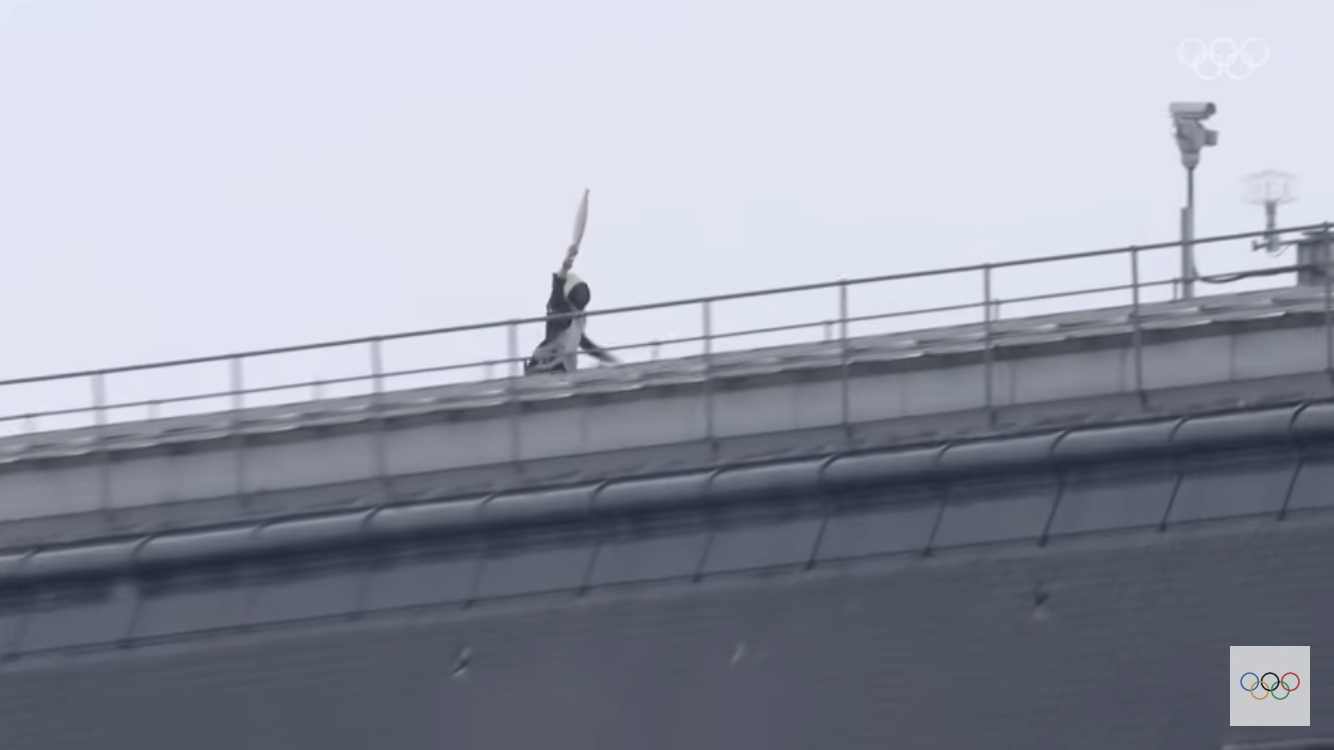
The oarsman/torchbearer is able to influence the events of the show unnoticed. His appearance comes before or in between segments of the show, standing on rooftops overlooking the show, or weaving through it undetected. The superimposed word “synchronicite” or “synchronicity” appears after he zip lines or “flies” across the Seine. I think this moment is meant to convey a supernatural mobility. He is presented as a specter. This is very early in the show, right after he receives the torch from the children. The primary definition of synchronicity is “(in the psychology of Carl Jung) the simultaneous occurrence of causally unrelated events and the belief that the simultaneity has meaning beyond mere coincidence.” Its secondary meaning is “coincidence in time; contemporaneousness; simultaneity.” The emergence of this demonic figure on the earth’s surface and his travels are simultaneously occurring with the show’s progression. His presence seems unrelated but is actually beyond mere coincidence. It has meaning. It is synchronicity. The show tells us.
The figure enters a factory creating the case for the Olympic medals and makes his way through completely invisible to all the people around him. He has to dodge around them as an invisible presence. He is also invisible to them in the street as they wheel the cases of medals down the street. The commentators at this time consider it noteworthy to tell viewers that a piece of the Eifel Tower is at the heart of every medal, right before we see the dark figure run into the building where the medals are presumably forged, and right before we see the dancers by the river acting out a heartbeat with their arms on their chests and raising their arms up and out as though they were giving their hearts away. There definitely appears to be a synchronicity between the heart of the medals, the fire of the metallurgist, the hearts of the dancers, and the dark figure carrying the fire. (Later, the Silver Rider, the goddess Sequana, emerges from the Eiffel Tower on a white horse and a backdrop of angelic wings.) These events look unrelated, yet they are tied together to imply no mere coincidence. The metallurgist breaks the cast of one of the medals and shows the back of the medal, a winged feminine figure running toward the viewer, the Greek Pantheon on the left and the Eifel Towel on the right. (The commentators also metaphorically compared the Eiffel Tower to any revolutionary and contentious idea that comes out of Paris.) The hooded figure closes the cases containing these medals and men carry the cases down to the river. The people by the river continue dancing and a solitary male dancer far away on a gold stage on top of a roof wearing a skirt is featured. The dancers end their routine in pairs making heart shapes with their arms.
The hooded figure appears on a separate rooftop to enter another building, dark and descending. He gets to a theatre inside reenacting the French Revolution. The dark figure weaves his way through the battle scene, again unnoticed. The word “liberte” or “liberty” appears at the conclusion of the scene, a woman in a white dress covered in blood standing on the top of a pile of debris and bodies, a gun in her left hand. She is handed the French flag and raises it in her right hand as if to demonstrate the transfer of power. In the closing ceremony, we will see the golden voyager being handed a Greek flag as a symbol of transfer of power, and he is raised on a pile of alien minions. In the book of Daniel, the prince of Greece is a spiritual entity (Daniel 10:20).
The oarsman/torchbearer stands on the roof opposite the Seine, holding the torch and watching on the Marie Antoinette scene, which I have already described in my first post about rivers. I won’t reiterate it here.
After that, the camera pans over to a military band on the bridge that begins to sing, and across the screen appear the word “egalite” or “equality.” The hooded torch bearer runs through the marching band unnoticed and stops ahead of them, kneeling down with his right knee (which you only bow to God) and lights a sequence of pyrotechnics that have this domino effect down both sides of the bridge and into the building in front of him. Out of the building come seven women dressed in gold, one clearly the central figure. The other six dance around her as she sings and they all dance lewdly, approaching the opposing military band. The band marches forward and splits, surrounding the female dancers, encircles them, then begins to dance with them. The female dancers seduce the male military band. Is this equality?
After this we see the hooded torchbearer crouching on top of another roof, rise, and enter the Louvre, passing through a hall of marble statues depicting Greek gods and goddesses. He stops and takes an extra moment at the headless Nike for some reason (the directors of this show like headless figures apparently). The statues and paintings he passes with the torch come alive and statues move and figures in paintings come out of their canvases to crowd around a window and watch the parade of nations down the Seine. The word “fraternite” or “fraternity” is then featured on the screen. Is this the fraternity of the art coming to life?
The museum figures continue to watch the parade, and the hooded torchbearer leaves and discovers rubble and a deep hole like a manhole going down into the floor in the Louvre. The hooded torchbearer looks up and sees a broken screen, as if something came up out of the ground and smashed through the screen. How can that be good? Death and Sheol and Hades are always referred to as down.
After several more nations go by, the hooded torchbearer is seen running across the top of a roof again, going into a building with a large clock, the time being 9:50. He looks at the clock from behind, inside the clock tower, and walks over to a lever with a dial arranged like a clock. Using Roman numerals, it appears to be a time dial with this order:
- Before time – V (7:00 o’clock)
- Distant past – IV (9:00 o’clock)
- Past – III (10:00 o’clock).
- Present – I (12:00 o’clock)
- Future – III (2:00 o’clock)
- Far future – IV (3:00 o’clock)
- Beyond the future – V (5:00 o’clock)
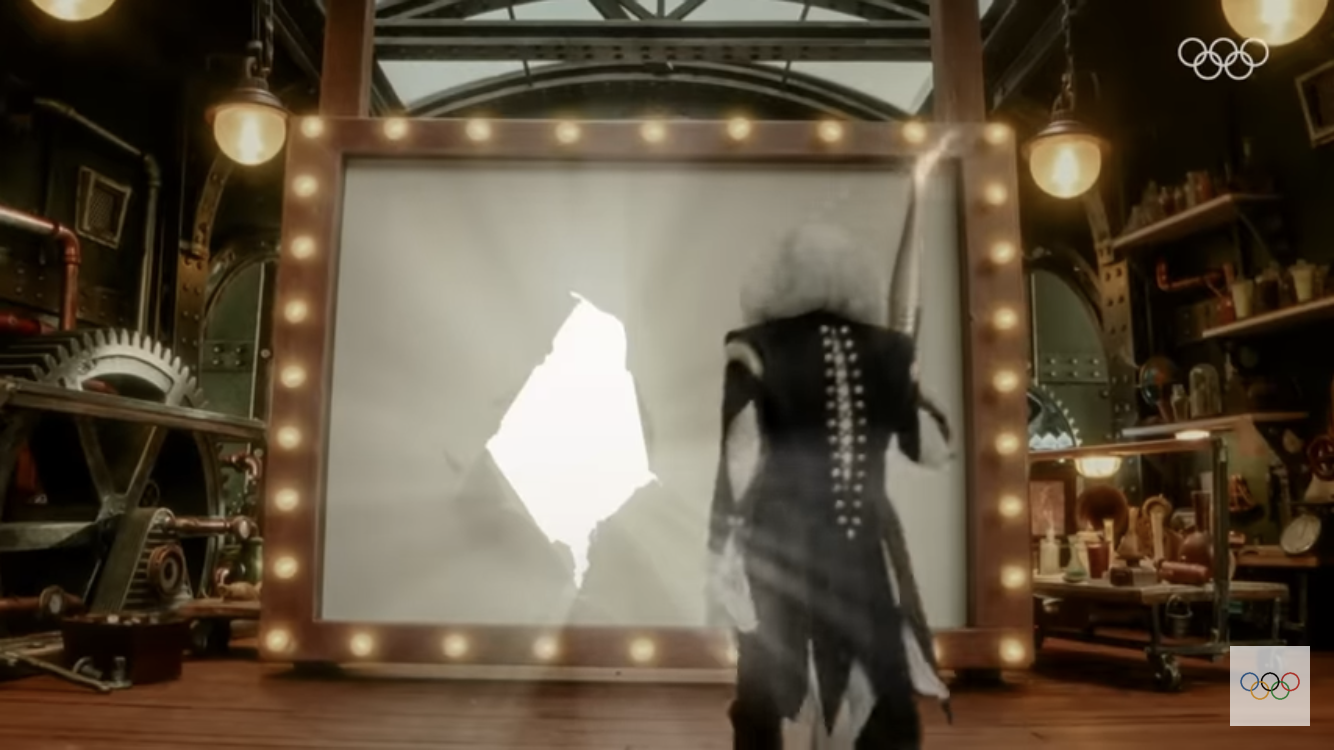
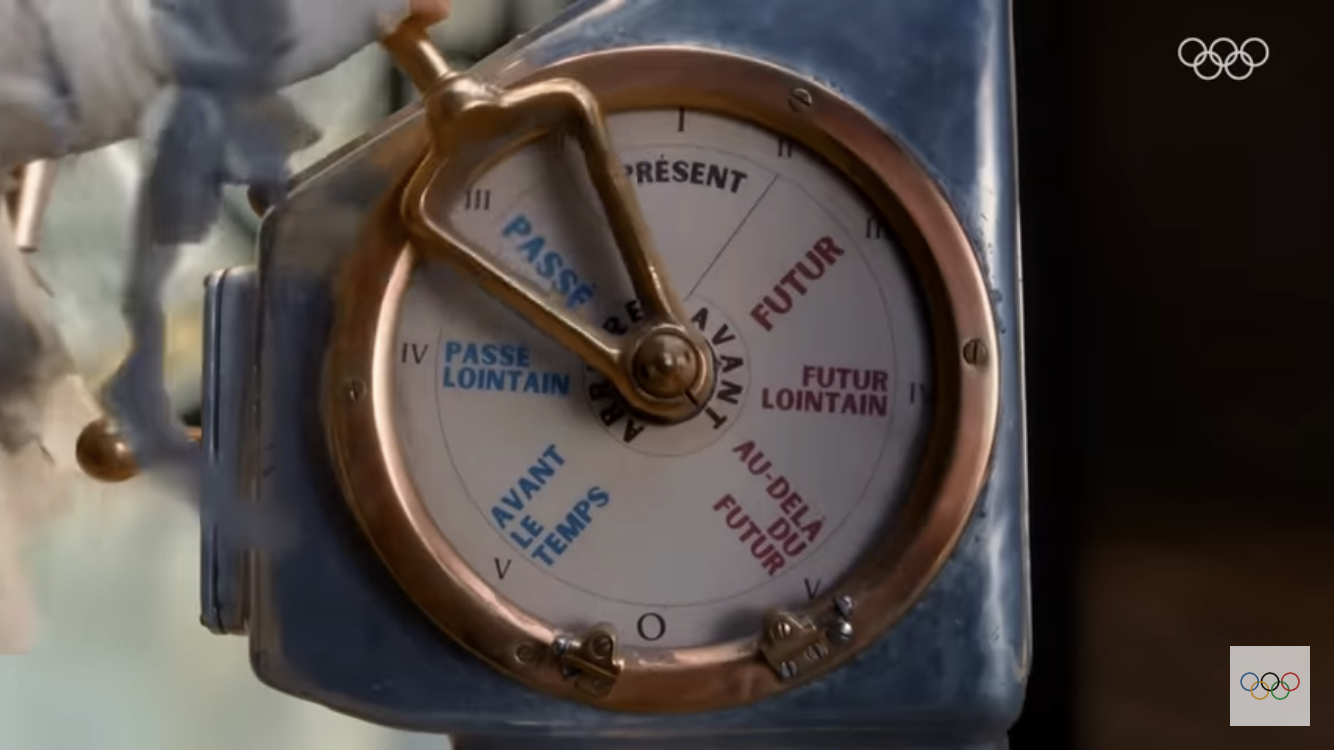
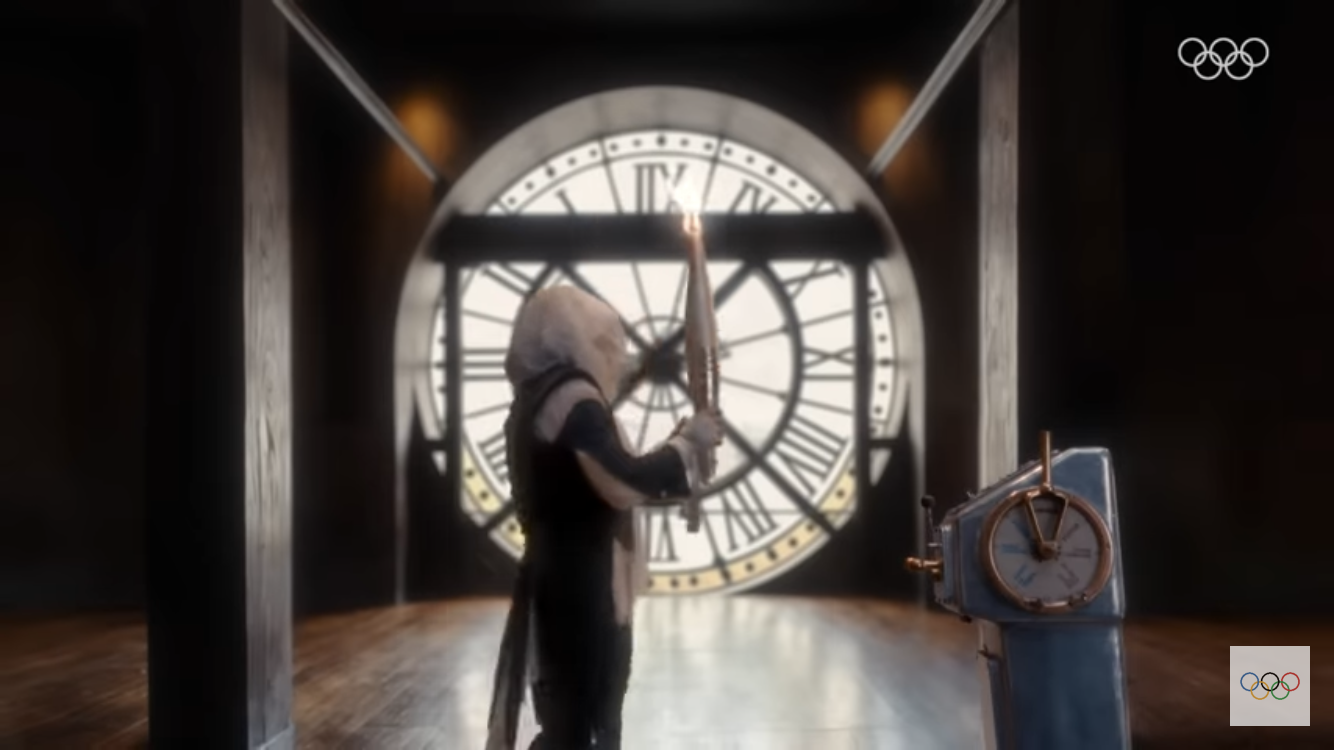
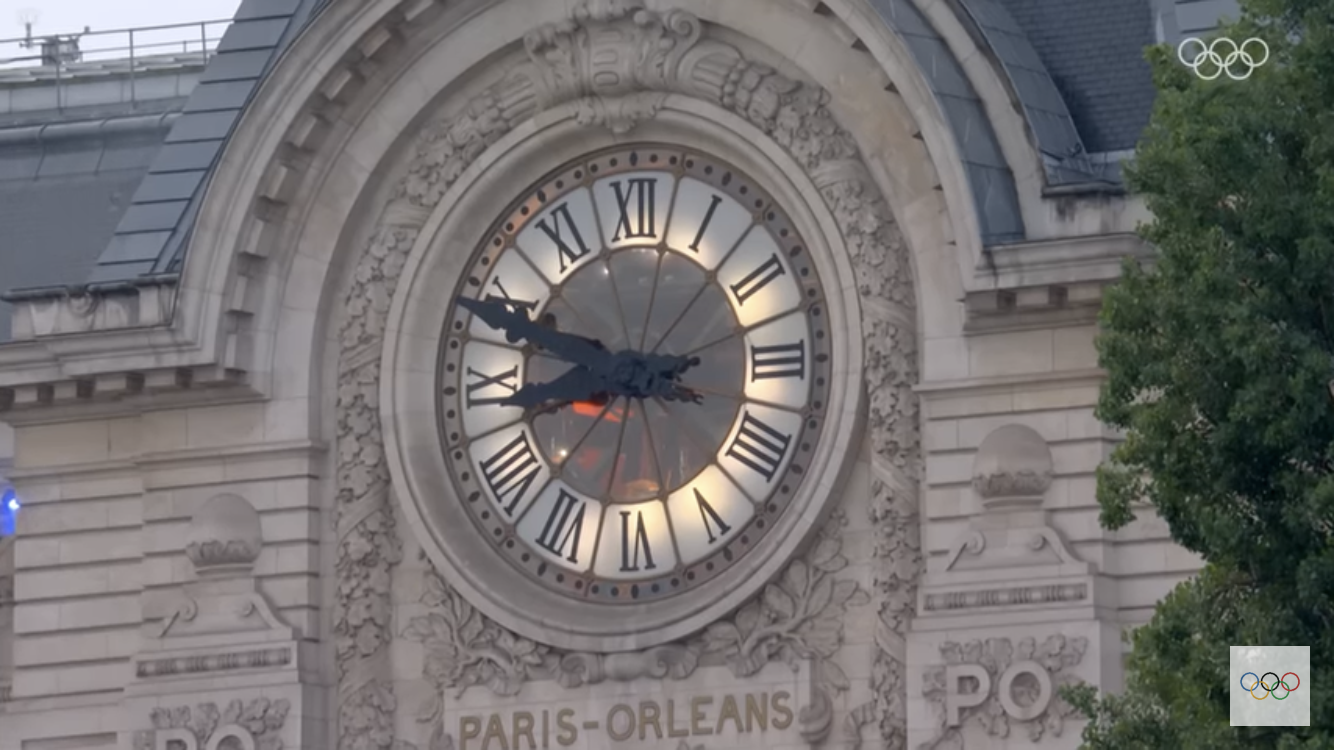
Time is at the top of the dial, the past and the future being mirror images of themselves on opposite side of the dial. The dial is set to present. The torchbearer grabs the handle, pushes it to beyond the future, then pulls it back to past. An older clock and older items appear in the clock tower. A screen drops down with an old film of a moving train. It breaks out of the screen and into the tower, leaving a ripped hole in the projector screen. This whole section implies he can or at least tries to manipulate time. Demons want to manipulate time. They want to control human history. Why would the show have “before time” and “beyond the future”? In a world without God or spiritual forces, there is nothing before time, and there is nothing beyond the future. According to the Bible, only God was before time and He is what will be after this world is gone. Angels were created somewhere in there but we don’t know when. It could have been before time, but we just don’t know. The time on the clock is also significant. A clock appeared in the earlier scene of three people leaving the library and going to an apartment to have an orgy. The time on the clock then is 8:20, which is earlier. Remember, in the show at this level, every single thing has meaning. Is the clock a symbol of the progression of demonic influence? Is it a symbol of how much time demons have left before they are judged? I don’t know. But the clock position and the position of the dial the hooded figure sets match one another. This is not coincidence. this is synchronicity.
Back to the scene, the hooded torchbearer, after pulling the time handle to past, steps through into a cinematic world of black and white. He walks across a bridge and hops into a hot air balloon basket, the actual pilot standing by and watching. He lights the balloon with the Olympic flame, and it begins to take off. As it lifts off, the screen becomes increasingly colored. He passes an early flying machine, then a rocket. He enters space, and then it becomes a cinematic fantasy world. The hot air balloon floats past a Claymation style moon with a face and scope. Le Statue de la Liberte of Paris sticks out of a brown planet, presumably a dead earth, and the statue is in ruins. Parts of its crown are broken off. Its flame is extinguished. Is this supposed to be the famous Statue of Liberty in New York, or is this the quarter size replica in Paris that was inaugurated two years later? Both statues, based on Greco-Roman style, represent liberty and democracy. Are the directors saying liberty and democracy are dead? The Statue of Liberty was created by a Frenchman inspired by the American Civil War, Lincoln’s assassination, and the defeat of slavery. Are the directors implying the victory over slavery is ended? Did Lincoln die in vain? If the answer is no, then why would they put this in their show? It’s implied that the accurate definition of liberty is the woman covered in blood standing on top of a pile of dead bodies, not the Statue de la Liberte that holds a tablet representing law and the torch representing moral enlightenment.
The appearance and behavior of the hooded torchbearer throughout the opening ceremonies implies he is directly involved with the progression of the show as an unseen force who can travel in superhuman ways, travel undetected by the human performers, and manipulate time. That’s exactly what demons do. They can travel in ways beyond human capability, and they influence physical human events. I don’t think they can manipulate time, but they sure want to control it. In the book of Job, Satan answered God that he had come “From going to and fro on the earth, and from walking up and down on it” (Job 1:7, 2:2) For the ancient past, this type of mobility was indeed supernatural. Demons also influence human interactions on personal and national levels. In 1 Samuel, we see King Saul being influenced by an evil spirit to kill David, from whom is descended Jesus, the Son of David, the Messiah:
“10 The next day a harmful spirit from God rushed upon Saul, and he raved within his house while David was playing the lyre, as he did day by day. Saul had his spear in his hand. 11 And Saul hurled the spear, for he thought, “I will pin David to the wall.” But David evaded him twice.” (1Samuel 18:10-11)
“9 Then a harmful spirit from the Lord came upon Saul, as he sat in his house with his spear in his hand. And David was playing the lyre. 10 And Saul sought to pin David to the wall with the spear, but he eluded Saul, so that he struck the spear into the wall. And David fled and escaped that night.” (1 Samuel 19:9-10)
We also see in the Bible demons influencing individuals to make national-level decisions:
19 And Micaiah said, “Therefore hear the word of the Lord: I saw the Lord sitting on his throne, and all the host of heaven standing beside him on his right hand and on his left; 20 and the Lord said, ‘Who will entice Ahab, that he may go up and fall at Ramoth-gilead?’ And one said one thing, and another said another. 21 Then a spirit came forward and stood before the Lord, saying, ‘I will entice him.’ 22 And the Lord said to him, ‘By what means?’ And he said, ‘I will go out, and will be a lying spirit in the mouth of all his prophets.’ And he said, ‘You are to entice him, and you shall succeed; go out and do so.’ 23 Now therefore behold, the Lord has put a lying spirit in the mouth of all these your prophets; the Lord has declared disaster for you.” (1 Kings 22:19-23)
Israel lost this battle, and Ahab died from his battle wounds because Ahab, his counselors, and his army succumbed to demonic lies. As an aside, in the Old Testament, you see demons having access to God’s heavenly throne, but when Jesus died on the cross, they were thrown out of heaven for good (John 12:31).
Demonic influences are shown throughout the entire Olympic show, and they are definitely grounded in the Bible as something that really does happen, and it probably happens all the time in various places around the world. The oarsman/torchbearer spread his fire from hell across the bridge into the human world, but Jesus is the Bridge to heaven, salvation, peace, and eternal life. The oarsman/torchbearer tried to desecrate this Bridge by dancing triumphantly on the table of the Last Supper (literally this part of the show was on a bridge), but he cannot undo the power of the cross and the fact that it is our only bridge to heaven.
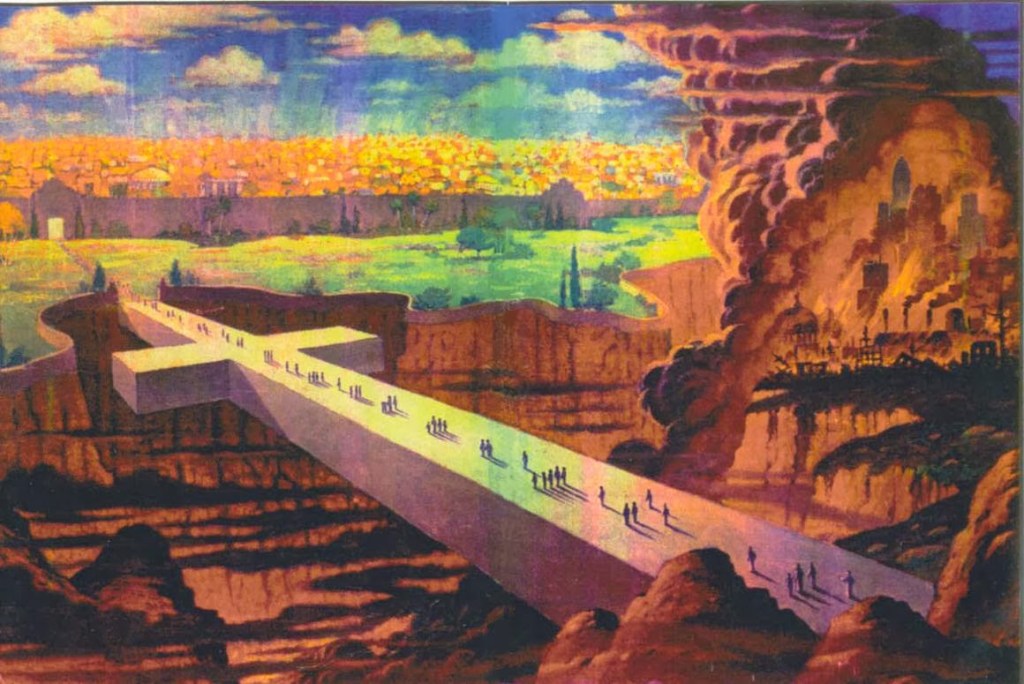
Collosians 1:13-23 says,
13 He [God] has delivered us from the domain of darkness and transferred us to the kingdom of his beloved Son, 14 in whom we have redemption, the forgiveness of sins.
15 He [Jesus] is the image of the invisible God, the firstborn of all creation. 16 For by him all things were created, in heaven and on earth, visible and invisible, whether thrones or dominions or rulers or authorities—all things were created through him and for him. 17 And he is before all things, and in him all things hold together. 18 And he is the head of the body, the church. He is the beginning, the firstborn from the dead, that in everything he might be preeminent. 19 For in him all the fullness of God was pleased to dwell, 20 and through him to reconcile to himself all things, whether on earth or in heaven, making peace by the blood of his cross.
21 And you, who once were alienated and hostile in mind, doing evil deeds, 22 he has now reconciled in his body of flesh by his death, in order to present you holy and blameless and above reproach before him, 23 if indeed you continue in the faith, stable and steadfast, not shifting from the hope of the gospel that you heard, which has been proclaimed in all creation under heaven, and of which I, Paul, became a minister.
If you share this faith, The Bible urges us to continue in it, stable, steadfast, and unshifting. If you want to share this faith, you can by believing and repenting of your sins. Begin a relationship with God through reading His Bible, prayer, and attending a church or body of believers.
Next, I will publish a post that takes a close look at the second demonic character of the Paris Olympics, the river rider. Until then, God bless you and keep you.
Sources
“Ancient necropolis unearthed just feet away from bustling Paris train station.” Live Science. https://www.livescience.com/archaeology/romans/ancient-necropolis-unearthed-just-feet-away-from-bustling-paris-train-station. Accessed 10 November 2024.
The Bible. English Standard Version, Crossway, 2001.
“Statue of Molech, Pagan Deity of Child Sacrifice, Displayed at Colosseum.” CBN. https://www2.cbn.com/news/news/statue-molech-pagan-deity-child-sacrifice-displayed-colosseum. Accessed 24 September 2024.

 Valley Princess
Leave a comment